Men Well-Being
Stress and Anxiety: A Complete Guide to Understanding, Managing and Healing
Stress and anxiety are among the most common mental health challenges people experience today, yet they are often misunderstood or ignored until they begin affecting daily life. While stress is your body’s natural response to a challenge or demand, anxiety is a persistent feeling of worry or fear that can continue even when there is no immediate threat. Understanding the difference between the two is the first step toward protecting your mental and physical well-being.
Remember, seeking support is a sign of strength, not weakness—and with the right knowledge and consistent care, stress and anxiety can be managed successfully.
In This Article
- What Is Stress and Anxiety?
- Why Stress and Anxiety Happen
- Symptoms of Stress and Anxiety
- Causes of Stress and Anxiety
- Risk Factors That Make You More Vulnerable
- The Scientific Explanation Behind Stress and Anxiety
- Real-Life Examples
- Common Mistakes People Make
- Treatment Options for Stress and Anxiety
- Lifestyle Changes That Reduce Stress and Anxiety
- Diet Tips for Managing Stress and Anxiety
- Exercise: A Natural Anxiety Reducer
- Meditation for Stress and Anxiety Relief
- Breathing Exercises for Immediate Relief
- Doctor’s Advice
- When to Seek Professional Help
- 7-Day Action Plan
- Daily Checklist
- Frequently Asked Questions (FAQs)
- Summary
- Call to Action
What Is Stress and Anxiety?
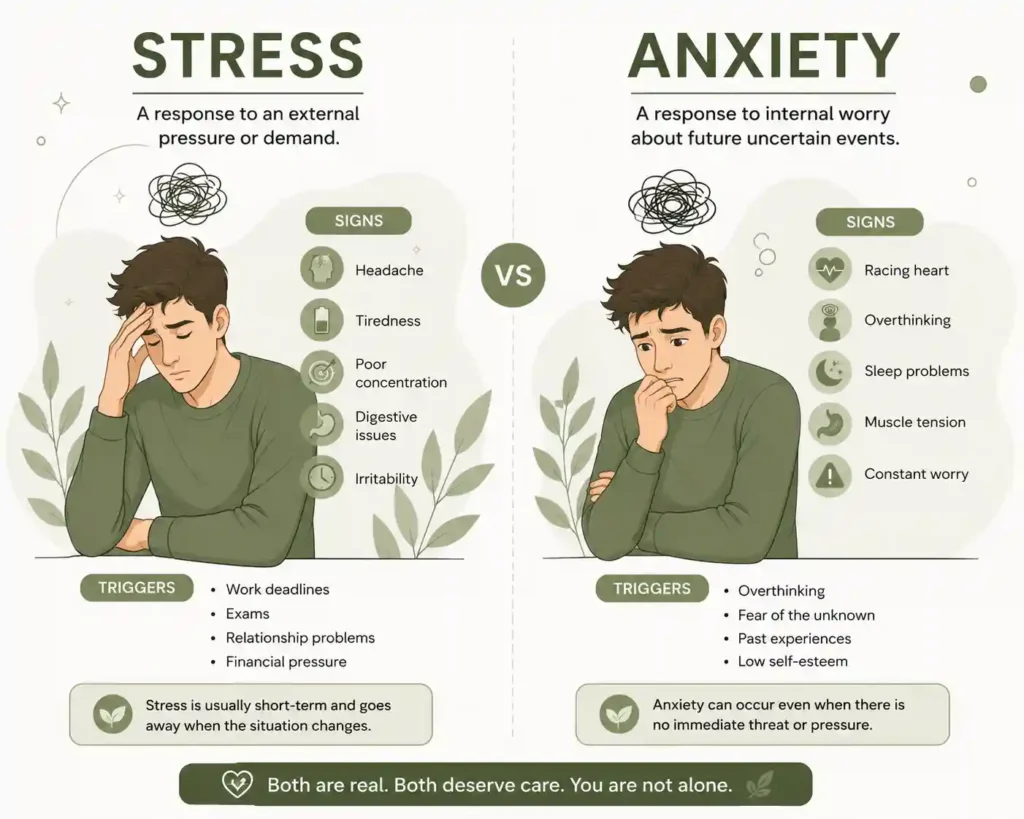
Stress is your body’s short-term reaction to a demand or challenge, while anxiety is a persistent state of worry and unease that can continue even when there’s no immediate danger. Think of stress as a spark and anxiety as the smoke that lingers long after the fire is out.
I want you to notice something. Most people use “stress” and “anxiety” interchangeably, but your body actually experiences them differently.
Stress is situational. Your boss messages you at 11 p.m. asking for a report by morning. Your heart races, your palms sweat, you feel a jolt of urgency. That’s stress. It has a start date and, usually, an end date.
Anxiety doesn’t always need a reason. You could be lying in bed, everything in your life technically “fine,” and still feel a knot in your stomach that won’t go away. That unexplained dread, that sense of “something is wrong” even when nothing is — that’s anxiety.
Why Stress and Anxiety Happen
Brain Detects a Threat
Fight-or-Flight Response Activates
Cortisol & Adrenaline Are Released
Heart Rate & Muscle Tension Increase
Continuous Stress Can Lead to Anxiety
Stress vs Anxiety: What’s the Difference?
| Feature | Stress | Anxiety |
|---|---|---|
| Trigger | Usually clear (exam, deadline, conflict) | Often unclear or disproportionate |
| Duration | Temporary, fades once the trigger resolves | Can persist for weeks or months |
| Physical Response | Sudden spike (racing heart, sweating) | Chronic tension (jaw clenching, fatigue) |
| Thought Pattern | “I need to handle this.” | “What if something goes wrong?” |
| Relief | Often resolves after the task is done | May continue even after the task is done |
Why Stress and Anxiety Happen
Stress and anxiety happen because your brain’s alarm system — designed thousands of years ago to protect you from physical danger — now reacts the same way to emails, deadlines, and social pressure. Your body cannot tell the difference between a tiger and a toxic boss, so it prepares you to fight or flee either way.
Imagine your ancestor facing a wild animal. Their brain instantly triggered a cascade of hormones — cortisol and adrenaline — to help them run or fight. That system saved lives for thousands of years.
Imagine your ancestor facing a wild animal. Their brain instantly triggered a cascade of hormones — cortisol and adrenaline — to help them run or fight. That system saved lives for thousands of years.
Now fast-forward to today. You open your laptop and see 40 unread emails, one marked “urgent” from your manager. Your brain doesn’t know this isn’t a life-threatening tiger. It responds exactly the same way — heart rate up, muscles tense, thoughts racing.
The problem isn’t that your body is malfunctioning. The problem is that your body is functioning exactly as designed, but the “threats” in modern life never really stop. There’s no tiger to outrun and then relax. There’s another email tomorrow, another deadline next week, another family expectation next month. The alarm system stays switched on, and that’s when normal stress starts tipping into chronic anxiety.
Symptoms of Stress and Anxiety You Shouldn’t Ignore
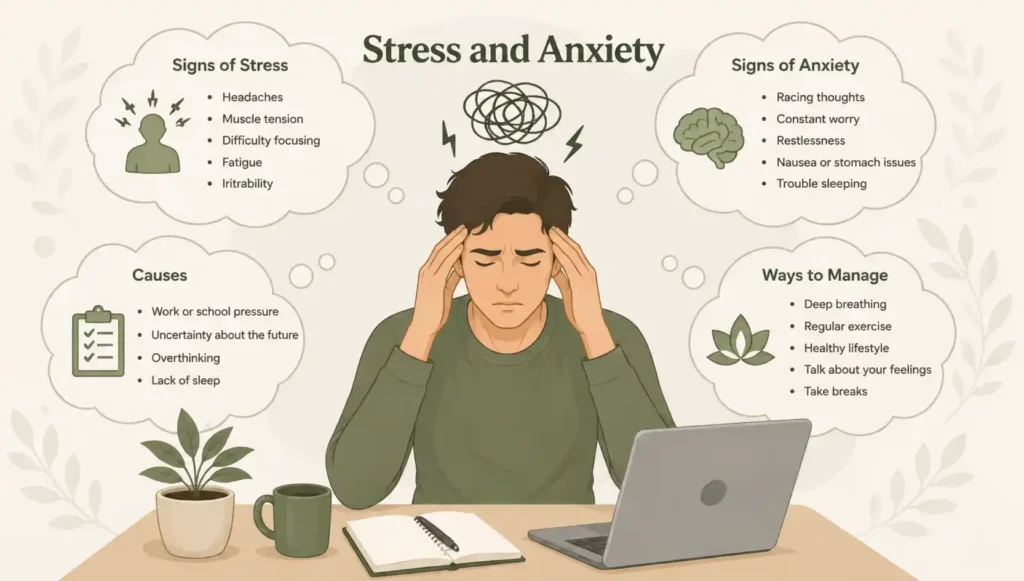
The most common symptoms of stress and anxiety include a racing heart, muscle tension, fatigue, irritability, difficulty concentrating, sleep disturbances, and constant overthinking. These symptoms can appear physically, emotionally, cognitively, or behaviourally, often all at once.
Let’s break this down properly, because most people only notice the obvious signs and miss the quieter ones.
Physical Symptoms
Emotional Symptoms
Cognitive Symptoms
Behavioural Symptoms
Causes of Stress and Anxiety
The main causes of stress and anxiety include work pressure, financial insecurity, relationship conflicts, health concerns, academic pressure, major life transitions, and unresolved trauma. In most cases, it is not one single event but a combination of ongoing pressures that pushes the nervous system into overdrive.
Let’s look at the most common real-life causes that people experience every day:
Risk Factors That Make You More Vulnerable
Certain factors increase your likelihood of developing stress and anxiety. Knowing these risk factors doesn’t mean you’re destined to experience anxiety—it simply helps you understand where prevention and early intervention should begin.
Family History
- Parent or sibling with anxiety
- Family history of depression
- Naturally more reactive nervous system
Personality Traits
- Perfectionism
- Overthinking habits
- High self-expectations
- Difficulty accepting “good enough”
Childhood Environment
- Critical caregivers
- Unpredictable home environment
- Overly controlling parenting
- Constant state of alertness
Chronic Illness
- Thyroid disorders
- PCOS
- Diabetes
- Hormonal imbalance affecting mood
Social & Lifestyle Factors
- Lack of social support
- Feeling isolated
- Excess caffeine, alcohol, or nicotine
Sleep & High-Pressure Environments
- Sleep deprivation
- Competitive exams
- Sales targets or startup culture
- Unstable job markets
The Scientific Explanation Behind Stress and Anxiety
Stress and anxiety are governed by the hypothalamic-pituitary-adrenal (HPA) axis, a communication system between your brain and adrenal glands that releases cortisol and adrenaline whenever your brain detects a threat. While this response is designed to protect you in dangerous situations, frequent activation can eventually lead to physical and mental exhaustion.
Real-Life Examples: You’re Not Imagining This
Common Mistakes People Make When Dealing With Stress and Anxiety
Ignoring Physical Symptoms
Dismissing chest tightness, headaches, or fatigue as “just tiredness” instead of recognising them as possible signs of stress or anxiety.
Overworking as a Coping Mechanism
Using constant busyness to avoid uncomfortable emotions only delays emotional processing and increases long-term stress.
Excessive Caffeine or Alcohol Use
Too much caffeine or alcohol interferes with your nervous system’s natural ability to regulate stress and anxiety.
Comparing Yourself to Others
Thinking “others have it worse, so I shouldn’t complain” often prevents people from seeking support when they genuinely need it.
Relying Only on Willpower
Anxiety isn’t something you can simply think your way out of. It requires practical coping strategies and, in many cases, professional support.
Self-Diagnosing Online
Reading about symptoms online can improve awareness, but it should never replace a proper assessment by a qualified mental health professional.
Waiting Too Long to Seek Help
Many people wait until they reach a breaking point before speaking to a therapist, even though early intervention is often much more effective.
Treatment Options for Stress and Anxiety
Effective treatment for stress and anxiety usually combines therapy, healthy lifestyle changes, and, when necessary, medication prescribed by a qualified psychiatrist. Among all psychological treatments, Cognitive Behavioural Therapy (CBT) remains one of the most evidence-based approaches, helping people identify and change negative thought patterns that fuel anxiety.
Below are the most effective treatment options supported by clinical research:
Cognitive Behavioural Therapy (CBT)
CBT helps identify distorted thinking patterns, such as catastrophizing or all-or-nothing thinking, and replaces them with healthier, balanced thoughts. Studies show significant improvement in generalized anxiety, social anxiety, and panic disorder within 8–12 therapy sessions.
Mindfulness-Based Stress Reduction (MBSR)
An evidence-based eight-week program combining mindfulness meditation, breathing techniques, and body awareness exercises to improve emotional regulation and reduce anxiety symptoms.
Medication (When Required)
For moderate to severe anxiety, psychiatrists may prescribe SSRIs or short-term anti-anxiety medication. Medication is a medical treatment—not a sign of weakness—and is often combined with therapy for better outcomes.
Lifestyle-Based Interventions
Quality sleep, regular physical activity, a balanced diet, reduced screen time, and stress-management techniques create the foundation that makes therapy and medication more effective.
Support Groups & Peer Counselling
Sharing experiences with others facing similar challenges helps reduce isolation, builds emotional resilience, and provides encouragement throughout the recovery journey.
Choosing the Right First Step
The best treatment depends on the severity of your symptoms. Early intervention often prevents stress from developing into long-term anxiety and improves recovery outcomes.
Occasional Stress
Lifestyle changes, breathing exercises, mindfulness, and journaling are usually effective first steps.
Persistent Worry
If anxiety continues for several weeks, consider Cognitive Behavioural Therapy (CBT) or counselling with a licensed therapist.
Panic Attacks or Physical Symptoms
Consult a psychiatrist or mental health professional for a complete clinical assessment.
Anxiety Affecting Daily Life
When work, relationships, or sleep are affected, combined therapy and medication may be recommended.
Thoughts of Self-Harm
Seek immediate professional or emergency mental health support. This situation requires urgent care.
Lifestyle Changes That Genuinely Reduce Stress and Anxiety
Small, consistent lifestyle habits—such as maintaining a regular sleep schedule, reducing screen time, and creating healthy daily routines—help regulate your body’s internal clock and reduce unnecessary cortisol spikes over time.
Fix Your Sleep Schedule
Go to bed and wake up at the same time every day to support your circadian rhythm and reduce cortisol fluctuations.
Create a Digital Sunset
Avoid social media, news, and screens for at least one hour before bedtime to reduce overstimulation.
Create a “Worry Window”
Set aside 15 minutes each day to write down your worries instead of allowing anxious thoughts to interrupt your entire day.
Learn to Say No
Protect your time and avoid unnecessary commitments that increase chronic stress and emotional exhaustion.
Schedule Recovery Time
Your nervous system needs recovery just as your muscles need rest after exercise. Make downtime part of your routine.
Limit Caffeine After 2 PM
Caffeine remains active for several hours and may stimulate the same stress pathways involved in anxiety.
Learn More About the Physical Effects of Stress
Stress doesn’t only affect your mental health—it can also impact your heart, hormones, immune system, sleep, digestion, and overall physical well-being. If you’d like to understand how prolonged stress affects different parts of the body, read our detailed guide on Effects of Stress on Men’s Mind and Body.
Diet Tips for Managing Stress and Anxiety
Certain foods can help regulate mood and reduce anxiety symptoms by supporting neurotransmitter production and maintaining stable blood sugar levels. On the other hand, excess sugar, caffeine, and highly processed foods may worsen anxiety by triggering cortisol spikes and energy crashes.
Foods That Help
- ✓Magnesium-rich foods – Spinach, almonds, and dark chocolate help support a healthy nervous system.
- ✓Omega-3 fatty acids – Walnuts, flaxseeds, and salmon are linked to better mood regulation and reduced inflammation.
- ✓Complex carbohydrates – Whole grains, oats, and brown rice support stable serotonin production.
- ✓Probiotic foods – Curd and fermented foods promote gut health, which influences the gut-brain axis.
- ✓Herbal teas – Chamomile and ashwagandha-based teas may have mild calming effects.
Foods & Habits to Reduce
- •Excess caffeine (coffee and energy drinks)
- •Refined sugar and processed snacks
- •Alcohol, which disrupts sleep and can worsen anxiety the next day
- •Skipping meals, which causes blood sugar fluctuations that may mimic anxiety symptoms
Exercise: A Natural, Evidence-Backed Anxiety Reducer
Regular physical exercise helps reduce stress and anxiety by lowering cortisol levels while increasing endorphins, serotonin, and dopamine—the brain’s natural mood-stabilising chemicals. Even 20–30 minutes of moderate exercise, three to five times a week, can produce measurable improvements in anxiety symptoms.
The goal isn’t an intense workout. Consistent movement is what makes the biggest difference.
Brisk Walking
Walk for around 30 minutes each day, preferably outdoors. Combining movement with sunlight exposure naturally supports serotonin production and improves mood.
Yoga
Relaxing poses such as Balasana (Child’s Pose) and Shavasana activate the parasympathetic nervous system, helping your body switch into a calmer state.
Strength Training
Regular resistance training builds physical resilience and has been shown to reduce symptoms of generalized anxiety while improving overall confidence.
Dance or Sports
Any enjoyable activity that keeps you moving and slightly out of breath encourages the release of endorphins, helping reduce stress naturally.
Meditation for Stress and Anxiety Relief
Meditation helps reduce stress and anxiety by activating the parasympathetic nervous system and lowering activity in the amygdala—the brain’s fear-processing centre. Regular practice, even for just 10 minutes a day, has been shown to lower cortisol levels and improve emotional regulation over time.
Activates the Calm Response
Stimulates the parasympathetic nervous system, helping your body relax naturally.
Reduces Amygdala Activity
Helps quiet the brain’s fear-processing centre and reduces anxious reactions.
Lowers Cortisol Levels
Regular meditation supports healthier stress hormone regulation over time.
Improves Emotional Balance
Enhances emotional regulation and builds resilience against everyday stress.
A Simple 10-Minute Meditation Practice to Start With
You don’t need any special equipment or previous experience to begin meditating. Follow these five simple steps to build a calming daily practice.
Find a Comfortable Position
Sit comfortably with your back straight and gently close your eyes.
Take Deep Breaths
Take three slow, deep breaths to help your body relax and settle into the present moment.
Focus on Your Breathing
Bring your attention to your natural breathing rhythm without trying to control or force it.
Notice Wandering Thoughts
When thoughts arise—which they naturally will—simply notice them without judgment and gently return your focus to your breath.
Practice for 10 Minutes
Continue for about 10 minutes each day, gradually increasing the duration as meditation becomes more comfortable.
A Simple 10-Minute Meditation Practice to Start With
You don’t need any special equipment or previous experience to begin meditating. Follow these five simple steps to build a calming daily practice.
Find a Comfortable Position
Sit comfortably with your back straight and gently close your eyes.
Take Deep Breaths
Take three slow, deep breaths to help your body relax and settle into the present moment.
Focus on Your Breathing
Bring your attention to your natural breathing rhythm without trying to control or force it.
Notice Wandering Thoughts
When thoughts arise—which they naturally will—simply notice them without judgment and gently return your focus to your breath.
Practice for 10 Minutes
Continue for about 10 minutes each day, gradually increasing the duration as meditation becomes more comfortable.
Breathing Exercises: Your Fastest Tool for Immediate Relief
Breathing exercises reduce stress and anxiety within minutes by activating the vagus nerve, helping your body shift from fight-or-flight mode into a calmer, more balanced state. Unlike many relaxation techniques, breathing exercises require no equipment and can be practised anywhere.
4-7-8 Breathing
- 1Inhale quietly through your nose for 4 seconds.
- 2Hold your breath for 7 seconds.
- 3Exhale completely through your mouth for 8 seconds.
- 4Repeat the cycle 4 times.
Box Breathing
- 1Inhale for 4 seconds.
- 2Hold for 4 seconds.
- 3Exhale for 4 seconds.
- 4Hold again for 4 seconds.
- 5Repeat for 2–3 minutes.
Diaphragmatic Breathing
- 1Place one hand on your chest and one on your belly.
- 2Breathe in slowly through your nose, letting your belly rise.
- 3Exhale slowly through pursed lips.
- 4Continue for 5 minutes, focusing on your belly movement.
Keep these breathing exercises in your back pocket for exam halls, job interviews, before presentations, during flights, or in the middle of a panic wave. They work because they actively calm your nervous system in real time rather than simply distracting you from anxious thoughts.
Doctor’s Advice: What Psychiatrists and Psychologists Want You to Know
Mental health professionals consistently advise that stress and anxiety should never be dismissed as “just in your head.” Both have measurable effects on the body and respond well to structured treatment when addressed early. Delaying treatment often allows manageable stress to develop into a diagnosable anxiety disorder.
You Don’t Need to Be in Crisis
Seek therapy before stress becomes overwhelming. Prevention is always easier and more effective than crisis management.
Anxiety Is Treatable
Anxiety is not a permanent personality trait. With the right support, coping strategies, and treatment, symptoms can improve significantly.
Medication Is a Medical Tool
For moderate to severe anxiety, prescribed medication is not a sign of weakness. It can help create the stability needed for therapy to work effectively.
Don’t Ignore Physical Causes
Conditions such as thyroid disorders, vitamin D or B12 deficiency, and anaemia can mimic or worsen anxiety symptoms, so medical evaluation is important.
Consistency Wins Every Time
Ten minutes of healthy daily practice is far more beneficial than occasional hours of self-care. Small, consistent habits create lasting improvements.
When to Seek Professional Help for Stress and Anxiety
You should seek professional help for stress and anxiety if symptoms last longer than two weeks, interfere with your work, relationships, or sleep, or include panic attacks, intense hopelessness, or thoughts of self-harm. Early intervention significantly improves treatment outcomes and prevents escalation into more severe conditions.
When Should You Seek Professional Help?
Knowing when to seek help is just as important as recognising the symptoms of stress and anxiety. Early support can prevent symptoms from becoming more severe and improve recovery outcomes.
Seek Help Immediately If You Experience
- Thoughts of self-harm or suicide. In India, you can contact the KIRAN Mental Health Helpline (1800-599-0019), available 24/7 and toll-free.
- Panic attacks that feel physically unbearable or occur frequently.
- A complete inability to function at work, school, or home.
- Anxiety accompanied by significant weight loss, weight gain, or substance dependency.
Consider Scheduling a Consultation If
- Your level of worry feels disproportionate to the actual situation.
- You’ve been feeling “off” for more than two weeks without improvement.
- Your sleep has been disrupted for more than one week.
- Friends or family have noticed changes in your behaviour.
- You’ve started avoiding responsibilities, people, or places because of anxiety.
Your 7-Day Action Plan for Managing Stress and Anxiety
Follow this simple seven-day plan to begin building healthier habits that support emotional well-being and reduce stress over time.
| Day | Focus Area | Action |
|---|---|---|
| Day 1 | Awareness | Track your anxiety triggers in a notebook. Record the time, situation, and any physical symptoms you notice. |
| Day 2 | Breathing | Practice the 4-7-8 breathing technique twice today. |
| Day 3 | Sleep | Set a fixed bedtime and switch off all screens at least 60 minutes before sleeping. |
| Day 4 | Movement | Take a 20-minute walk, preferably outdoors. |
| Day 5 | Nutrition | Replace one processed snack with a magnesium-rich alternative such as nuts or dark chocolate. |
| Day 6 | Mindfulness | Practice a 10-minute guided meditation session. |
| Day 7 | Reflection | Review your notes from Day 1, identify patterns, and plan your next steps. |
Daily Checklist for Managing Stress and Anxiety
What are the 5 signs of stress and anxiety?
The five most common signs of stress and anxiety are a racing heart, constant overthinking, difficulty sleeping, irritability, and persistent muscle tension. If you notice several of these together, especially over more than two weeks, it’s worth paying closer attention.
What is the fastest way to relieve stress and anxiety?
The fastest way to relieve stress and anxiety in the moment is controlled breathing, particularly the 4-7-8 technique, which activates your parasympathetic nervous system within minutes and reduces the physical symptoms of a stress response.
What foods reduce stress and anxiety?
Magnesium-rich foods like spinach and almonds, omega-3 sources like walnuts and fish, complex carbohydrates like oats, and probiotic foods like curd have all been linked to improved mood regulation and reduced anxiety symptoms.
How can students manage exam-related stress and anxiety?
Students can manage exam-related anxiety through structured study schedules, regular breaks, breathing exercises before exams, adequate sleep, and avoiding last-minute cramming, which spikes cortisol and impairs memory recall right when it’s needed most.
Does anxiety get worse with age or better?
Anxiety doesn’t automatically get better or worse with age — it depends on whether underlying triggers, coping mechanisms, and support systems are addressed. Many people see significant improvement once they start therapy or build consistent lifestyle habits, regardless of age.
Can lack of sleep cause anxiety, or does anxiety cause lack of sleep?*
It works both ways. Poor sleep reduces your brain’s ability to regulate emotions, making you more anxiety-prone, while anxiety itself keeps your nervous system alert, making it harder to fall or stay asleep. This creates a cycle that needs to be broken from both sides
Is it possible to have stress and anxiety without knowing it?
Yes, many people normalise symptoms like irritability, fatigue, or trouble sleeping as “just how life is” without recognising them as signs of chronic stress or anxiety, especially when they’ve been dealing with these symptoms for a long time.
Can stress turn into an anxiety disorder?
Yes, chronic unmanaged stress can develop into generalized anxiety disorder over time. When cortisol stays elevated for prolonged periods, it changes how your brain’s alarm system responds, making anxious reactions more frequent and harder to control.
How do I know if it's stress or anxiety?
Stress usually has a clear, identifiable trigger and fades once that trigger resolves, while anxiety often persists without an obvious cause and can continue even after the stressful situation has passed. If your worry outlasts the actual problem, it’s likely anxiety.
Is anxiety a mental illness or just stress?
Anxiety becomes a diagnosable mental health condition, such as generalized anxiety disorder, when symptoms are persistent, disproportionate to the situation, and interfere with daily functioning for six months or more, according to DSM-5-TR criteria. Occasional stress-related worry does not meet this threshold.
