
Men Well-Being
Effects of Stress on Men's Mind and Body
Stress has become an increasingly common part of modern life, affecting men of all ages and lifestyles. Whether caused by work pressure, financial responsibilities, family commitments, relationship challenges, or personal expectations, long-term stress can significantly impact both physical and mental health. The effects of stress on men’s mind and body extend far beyond temporary worry, influencing emotional well-being, hormone balance, heart health, sleep quality, energy levels, and overall quality of life. Understanding these effects is the first step toward recognizing early warning signs and taking proactive measures to protect long-term health.
While short-term stress can improve focus and help the body respond to challenges, chronic stress keeps the body’s stress response active for prolonged periods. TLearning about the effects of stress on men’s mind and body empowers men to identify symptoms early, build healthier coping strategies, and improve both mental resilience and physical well-being.
In This Article
- What Is Stress?
- Effects of Stress on Men’s Mind
- Effects of Stress on Men’s Body
- Common Physical Symptoms of Stress in Men
- Long-Term Effects of Stress on Men’s Mind and Body
- Healthy Ways to Manage Stress Naturally
- When Should Men Seek Professional Help?
- Daily Tips to Reduce Stress and Improve Mental Well-Being
- Frequently Asked Questions (FAQs)
What Is Stress?
The effects of stress on men’s mind and body often develop gradually, making it difficult to notice the warning signs during the early stages.
When the brain perceives a threat, it activates the body’s fight, flight, or freeze response. This automatic survival mechanism releases stress hormones such as cortisol and adrenaline, increasing heart rate, blood pressure, and energy levels to prepare the body for action. Although this response is essential in emergencies, prolonged activation due to ongoing stress can negatively impact overall health.
During Stress, a Man’s Body Automatically
Increases Heart Rate
Raises Blood Pressure
Speeds Up Breathing
Releases Stress Hormones
Sharpens Alertness & Focus
Effects on Men's Mind
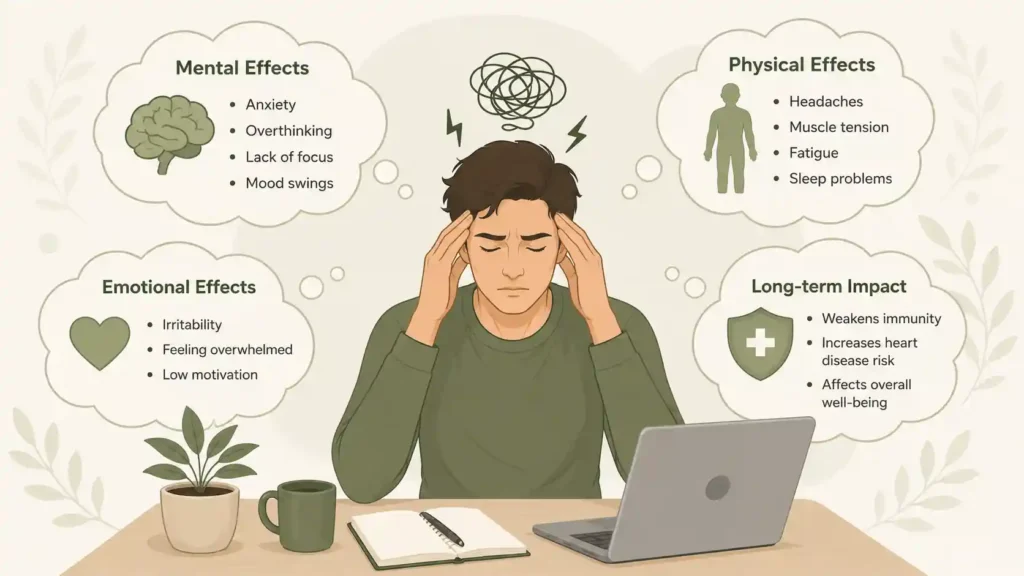
Occasional stress is a normal part of life, but chronic stress can significantly affect a man’s brain function and overall mental well-being. One of the earliest signs of prolonged stress is difficulty concentrating. Simple daily tasks that once felt manageable may become challenging because the mind remains occupied with constant worry, work pressure, or financial concerns. Over time, chronic stress can reduce focus, impair memory, slow decision-making, and negatively impact cognitive performance, making it harder for men to think clearly, solve problems, and stay productive in both their personal and professional lives.
Common Mental Symptoms of Stress in Men
Emotional Effects of Stress in Men
Long-term stress can significantly affect a man’s emotional well-being. Many men suppress or ignore their emotions, which may worsen stress over time and contribute to emotional exhaustion, relationship difficulties, and poor mental health. Common emotional effects of chronic stress include:
Effects on Men's Body
Stress doesn’t only affect the brain—it affects nearly every organ in the body.
Heart & Blood Vessels
- High blood pressure
- Increased heart rate
- Higher risk of heart disease and stroke
Muscles & Joints
- Muscle tension
- Neck and shoulder stiffness
- Back pain
- Frequent headaches
- Body aches and fatigue
Digestive System
- Indigestion
- Acid reflux
- Stomach discomfort
- Bloating
- Constipation or diarrhea
Immune System
- Frequent illnesses
- Slower recovery from infections
- Increased inflammation
Skin & Hair
- Acne breakouts
- Dry or irritated skin
- Hair thinning
- Excessive hair loss
- Premature aging signs
Hormonal Health
- Reduced testosterone levels
- Lower sex drive (Low Libido)
- Erectile dysfunction
- Low energy and stamina
- Hormonal imbalance
The Scientific Explanation Behind Stress and Anxiety
Stress and anxiety are governed by the hypothalamic-pituitary-adrenal (HPA) axis, a communication system between your brain and adrenal glands that releases cortisol and adrenaline whenever your brain detects a threat. While this response is designed to protect you in dangerous situations, frequent activation can eventually lead to physical and mental exhaustion.
Long-Term Effects of Chronic Stress
Healthy Ways to Manage Stress
Although it is impossible to eliminate stress completely, adopting healthy daily habits can help men manage stress more effectively and protect both their mental and physical health. Taking care of your daily stress and overall well-being is one of the most effective ways to reduce the effects of stress on men’s mind and body.
Stay Physically Active
Regular exercise, strength training, walking, cycling, or yoga helps lower stress hormones, improve mood, support heart health, and naturally boost energy levels.
Prioritize Quality Sleep
Aim for 7–9 hours of quality sleep every night. Restful sleep supports brain function, hormone balance, emotional well-being, muscle recovery, and overall health.
Practice Relaxation Techniques
- Deep breathing exercises
- Meditation
- Mindfulness practices
- Yoga or stretching
- Spending time outdoors
- Morning sunlight exposure
Talk to Someone You Trust
Sharing your thoughts with a trusted friend, family member, mentor, or support group can reduce emotional stress and help prevent feelings of isolation.
Take Regular Breaks from Work
Short breaks throughout the day improve concentration, reduce mental fatigue, prevent burnout, and increase productivity.
Maintain a Healthy Work-Life Balance
Set realistic boundaries between work and personal life. Avoid overcommitting yourself and make time for hobbies, family, and relaxation.
Eat a Balanced Diet
Nutritious foods rich in protein, whole grains, fruits, vegetables, and healthy fats help stabilize energy levels, support hormone health, and improve the body’s response to stress.
Listen to Relaxing Sounds
Listening to calming music, meditation audio, or nature sounds can help relax your mind, lower stress levels, and improve emotional well-being. Listen to this relaxing audio to reduce stress.
Seek Professional Support
If stress becomes overwhelming or starts affecting your work, relationships, or health, consult a mental health professional. Early support can help you develop effective coping strategies and prevent long-term complications.
When Should You Seek Help for the Effects of Stress on Men’s Mind and Body?
If you experience any of the following symptoms, they may indicate the effects of stress on men’s mind and body. Seeking professional support early can help protect your mental health, physical health, hormone balance, and overall well-being before chronic stress leads to more serious health complications.
- Stress is interfering with your work performance, family life, or daily routine.
- You frequently feel anxious, overwhelmed, irritable, or emotionally exhausted.
- Sleep problems or insomnia continue for several weeks.
- You notice ongoing fatigue, low motivation, or difficulty concentrating.
- You experience panic attacks, persistent sadness, hopelessness, or depression.
- You develop physical symptoms such as headaches, chest discomfort, digestive problems, or high blood pressure without a clear medical cause.
- You notice reduced libido, erectile dysfunction, or other signs of hormonal imbalance related to chronic stress.
Conclusion
The effects of stress on men’s mind and body should never be ignored. While stress is a natural part of life and short-term stress can improve focus, alertness, and performance, chronic stress can have serious consequences for a man’s mental health, brain function, hormonal balance, and physical well-being. Recognizing the early warning signs of stress, maintaining healthy lifestyle habits, and seeking professional support when needed are some of the most effective ways to protect both your mind and body.
Understanding the effects of stress on men’s mind and body empowers men to take control of their health before chronic stress leads to long-term emotional, cognitive, hormonal, or physical health problems. Remember, seeking help is not a sign of weakness—it is a sign of strength and self-care. Taking action early can help you build resilience, improve your quality of life, and live a healthier, happier, and more balanced life.
