
Well-Being

What are the main Type of Stress?

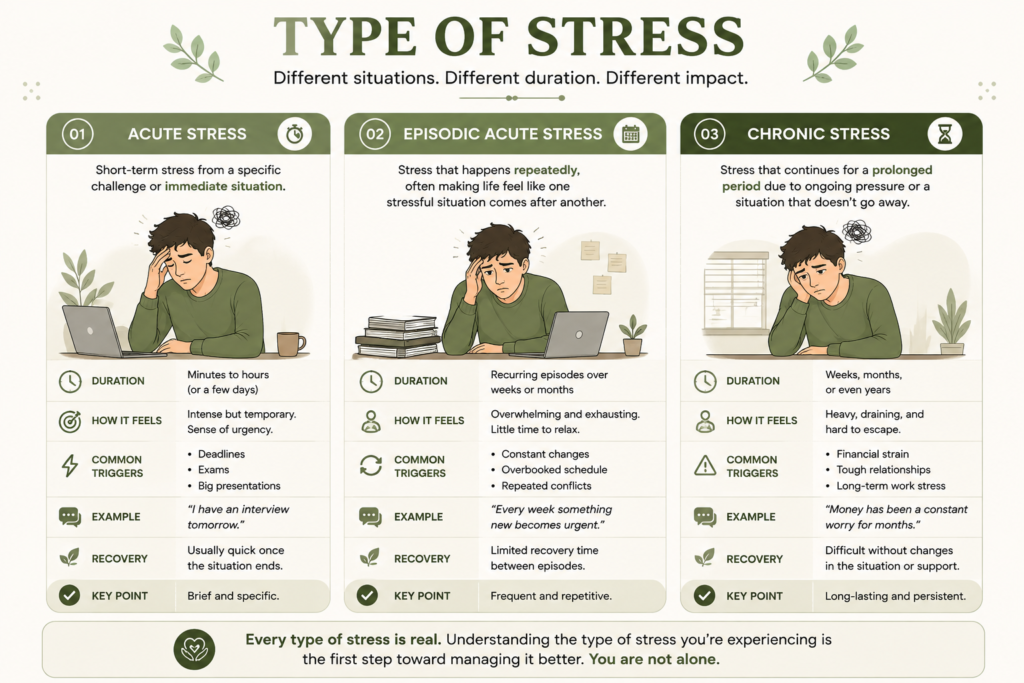
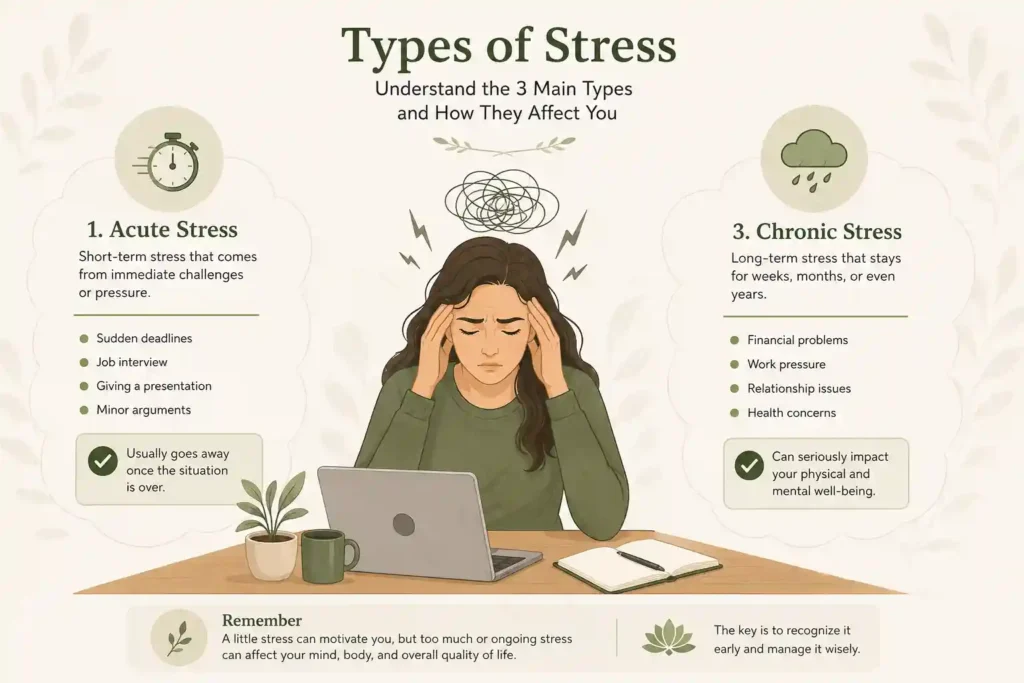
The most commonly used clinical classification describes three main type of stress: acute stress, episodic acute stress and chronic stress. Acute stress is short-lived and linked to a specific challenge. Episodic acute stress means acute stress happens repeatedly with little recovery between episodes. Chronic stress continues for weeks, months or longer. Work, money, relationships, family responsibilities and health concerns can act as stressors that contribute to any of these patterns.

It is also common to describe stress by its source, such as work-related, financial, emotional, social or physical stress. These are useful descriptions of where stress comes from, rather than separate medical diagnoses. The distinction matters because the right response depends on both the source of stress and how long it has been affecting you.

type of stress

In This Article

  • What Is Stress?
  • The 3 Main Type of Stress
  • Acute Stress
  • Episodic Acute Stress
  • Chronic Stress
  • Common Sources of Stress
  • Signs and Symptoms of Stress
  • Real-Life Examples
  • Common Mistakes When Dealing With Stress
  • How to Manage Stress
  • Lifestyle Changes
  • Exercise, Breathing & Meditation
  • A Simple 10-Minute Stress Reset
  • Stress in Women
  • When to Seek Professional Help
  • Stress Myths vs Facts
  • Frequently Asked Questions

What Is Stress?

Stress is your mind and body’s response to a challenge, demand or situation that feels difficult to manage. It is not automatically a sign that something is wrong with you. Everyone experiences stress, and short periods of stress can help you stay alert, respond quickly and meet a deadline.

The problem is what happens when stress becomes too intense, happens too often, or continues without enough recovery. You may notice that you are sleeping badly, snapping at people, struggling to concentrate, getting headaches, feeling exhausted or thinking about the same problem long after the day has ended.

Stress also does not look the same in everyone. One person may become restless and irritable. Another may go quiet, withdraw, sleep too much or feel emotionally numb.

The important question is not simply, “Am I stressed?” but “What is driving my stress, how long has it been happening, and is it affecting my daily life?”

type of stress

The 3 Main Type of Stress

The clearest way to understand the main type of stress is by looking at duration and pattern. Acute stress is brief, episodic acute stress keeps recurring, and chronic stress continues for a prolonged period.

1

Acute Stress

Short-term stress that happens in response to a specific challenge or immediate situation.

2

Episodic Acute Stress

Stress that happens repeatedly, often making life feel like one stressful situation comes after another.

3

Chronic Stress

Stress that continues for a prolonged period, often because the underlying pressure or situation doesn’t go away.

Remember: A person can experience more than one pattern of stress over time. What matters is understanding what is causing the stress, how often it happens, and whether you are getting enough time to recover.

1

Acute Stress

Acute stress is short-term stress that appears in response to a specific event or immediate challenge. It may happen before an exam, during a difficult conversation, when you receive unexpected news, or when you suddenly have to solve a problem.

You Might Notice

A faster heartbeat or feeling physically alert
Muscle tension or a tight feeling in the body
Nervousness or temporary anxiety
Difficulty relaxing until the situation is over
A sudden burst of focus or energy
Acute stress is not necessarily harmful. A manageable amount can help you prepare for a presentation or react quickly to danger. The body is designed to activate and then return toward a calmer state when the challenge has passed.

When Does It Become a Concern?

The issue is when acute stress happens so frequently that you rarely get a chance to recover. That pattern can move toward episodic acute stress.

Key takeaway

Acute stress is usually connected to a specific, short-term situation. The important part is giving your body enough time to settle and recover afterward.

2

Episodic Acute Stress

Episodic acute stress refers to repeated episodes of acute stress. Instead of having one stressful situation followed by recovery, the person repeatedly moves from one urgent problem to the next.

Urgent problem Pressure Little recovery Next problem

Imagine someone who wakes up already thinking about deadlines, rushes through the morning, spends the workday reacting to messages, comes home to family responsibilities, and then stays awake worrying about tomorrow. There may be no single crisis, but there is very little recovery.

Common Signs Can Include

Feeling rushed or constantly “behind”
Frequent irritability or frustration
Difficulty switching off after work
Repeated headaches, muscle tension or sleep problems
Feeling that another problem is always waiting
If this sounds familiar, simply telling yourself to “relax” may not be enough. It can help to look at the pattern behind the stress rather than treating every episode as a separate problem.
Too many commitments Unrealistic expectations Poor boundaries Constant notifications High work demands

Recognising the pattern can be the first step toward creating more space for recovery and reducing the cycle of constant urgency.

2

Episodic Acute Stress

Episodic acute stress refers to repeated episodes of acute stress. Instead of having one stressful situation followed by recovery, the person repeatedly moves from one urgent problem to the next.

Urgent problem Pressure Little recovery Next problem

Imagine someone who wakes up already thinking about deadlines, rushes through the morning, spends the workday reacting to messages, comes home to family responsibilities, and then stays awake worrying about tomorrow. There may be no single crisis, but there is very little recovery.

Common Signs Can Include

Feeling rushed or constantly “behind”
Frequent irritability or frustration
Difficulty switching off after work
Repeated headaches, muscle tension or sleep problems
Feeling that another problem is always waiting
If this sounds familiar, simply telling yourself to “relax” may not be enough. It can help to look at the pattern behind the stress rather than treating every episode as a separate problem.
Too many commitments Unrealistic expectations Poor boundaries Constant notifications High work demands

Recognising the pattern can be the first step toward creating more space for recovery and reducing the cycle of constant urgency.

3

Chronic Stress

Chronic stress is prolonged stress that continues for weeks, months or longer. It can develop when a difficult situation does not change, when multiple stressors accumulate, or when a person has very little opportunity to recover.

Weeks
Months
Or longer
Situations That May Contribute
Ongoing financial pressure
Persistent conflict at home
Long-term caregiving responsibilities
An unhealthy work environment
Social isolation
A continuing health or safety concern

Chronic stress may feel less dramatic than a sudden crisis, but that is part of what makes it easy to overlook.

“This is just how my life is.”

Possible Signs Include

Ongoing worry or feeling on edge
Emotional exhaustion
Trouble sleeping or unrefreshing sleep
Difficulty concentrating
Frequent headaches or body tension
Changes in appetite or energy
Irritability or low motivation
Feeling overwhelmed by ordinary tasks
Long-term stress can affect both mental and physical well-being. It is worth taking seriously, especially when symptoms persist or interfere with work, relationships, sleep or daily functioning.

Acute vs Episodic Acute vs Chronic Stress

Pattern How long? Real-life example What to watch for
Acute stress Short-lived A difficult presentation tomorrow Stress settles after the event
Episodic acute stress Repeated episodes One deadline ends and another begins Little time to recover
Chronic stress Weeks, months or longer Ongoing money, relationship or work pressure Stress becomes part of daily life

What Does Stress Feel Like?

Stress can show up in your body, thoughts, emotions and behavior. You do not need to have every symptom for stress to be affecting you.

Physical Emotional Cognitive Behavioral
Headaches Irritability Racing thoughts Avoiding tasks
Muscle tension Worry Poor concentration Withdrawing from others
Tiredness Feeling overwhelmed Forgetfulness Overeating or undereating
Stomach upset Low mood Indecision Difficulty resting
Sleep changes

WHO notes that stress can make it harder to relax and may be associated with anxiety, irritability, difficulty concentrating, headaches, body pains, stomach upset and sleep problems. The exact symptoms and intensity vary from person to person.

Real-Life Examples: Which Type of Stress Might This Be?

Stress does not always look the same. Understanding the type of stress you may be experiencing can depend on the situation, how often it happens, and how long it continues.

01
“I have an interview tomorrow and I can’t stop thinking about it.”
Likely Type of Stress: Acute Stress

The trigger is specific and time-limited.

02
“Every week something new becomes urgent. I never feel caught up.”
Possible Type of Stress: Episodic Acute Stress

Repeated stress episodes may leave little time for recovery.

03
“For the last six months, money has been a constant worry.”
Possible Type of Stress: Chronic Stress

The source is financial, and the duration suggests a chronic stress pattern.

04
“I’m exhausted because my job follows me home every night.”
Type of Stress: Work-Related Stress

The source is work-related and may be contributing to chronic or repeated stress.

05
“Nothing terrible happened today, but I feel completely drained.”
Consider This Type of Stress: Accumulated Stress

Stress can accumulate. Look at sleep, workload, relationships, health, and repeated daily stressors rather than searching for one dramatic cause.

BE AWARE OF THESE PATTERNS

Common Mistakes People Make When Dealing With Stress

Managing stress is not only about finding ways to relax. Understanding the type of stress you are experiencing and how you respond to it can help you recognize patterns that may be keeping the stress cycle going.

01

Waiting until you are completely exhausted

Waiting until you are completely exhausted before taking your type of stress seriously can make it harder to identify what is contributing to the problem.

02

Trying to fix everything at once

Trying to fix every part of life at the same time can make an already overwhelming situation feel even harder to manage, regardless of the type of stress involved.

03

Using distraction as the only way to switch off

Using scrolling, alcohol, overeating or constant work as the only way to switch off may distract from the underlying source of stress without addressing the pattern itself.

04

Treating the symptom while ignoring the source

For example, using relaxation techniques while an unsustainable workload continues unchanged. Identifying the type of stress and its underlying source can provide better context for deciding what needs to change.

05

Assuming asking for help means you are weak

Asking for support can be a practical part of dealing with stress. It does not mean you have failed to cope on your own.

06

Comparing your stress response with someone else’s

Different people respond differently to the same situation. Your response does not need to look like someone else’s to be valid, and the type of stress affecting one person may be very different from what another person is experiencing.

PRACTICAL STRESS MANAGEMENT

How to Manage Stress: A Practical Approach

There is no single stress-management technique that works for everyone. The most useful approach depends partly on the type of stress you are experiencing and how your body and mind respond to it. A practical approach usually combines reducing avoidable stressors, improving recovery, building healthy coping strategies, and getting support when you need it.

01

Deal with the stressor when you can

Understanding the source of your stress is an important part of effective stress management. If the source is a workload, look at priorities and boundaries. If it is money, identify the next practical financial step. If it is a relationship conflict, consider a calm conversation or professional support.

Remember: Stress-management skills are valuable, but they cannot always solve a problem that requires a real-life change.
02

Build a recovery routine

  • Keep a reasonably consistent sleep and wake schedule.
  • Take short breaks during long periods of work or study.
  • Spend some time away from constant notifications.
  • Stay connected with people you trust.
  • Make room for enjoyable activities rather than treating rest as something you must earn.
03

Exercise regularly

Regular physical activity can support stress management and help your body cope with stressful situations. Walking, cycling, yoga, strength training or another activity you enjoy can be useful.

Choose an intensity appropriate for your health and fitness rather than turning exercise into another source of pressure.

04

Try slow breathing

When you feel activated, slow your breathing and make the exhale comfortable and unhurried. This can be a simple coping strategy when you are experiencing an immediate stress response.

The goal isn’t to force calm. It is to give your attention a simple physical anchor while the stressful moment passes.
05

Use mindfulness or meditation

A few minutes of mindful attention can help you notice thoughts and feelings without immediately reacting to them. These practices may be useful as part of a broader approach to managing different types of stress.

WHO’s stress-management guidance includes practical skills that can be practised for a few minutes each day.
06

Eat regularly and support your sleep

A balanced diet, regular meals, adequate fluids and good sleep habits support general health and recovery. These habits can be especially important when ongoing stress is affecting your daily routine.

If caffeine is making you feel more jittery or is affecting your sleep, consider reducing it, especially later in the day.

types of stress

When Should You Seek Professional Help for Stress?

The right time to seek support can depend on the type of stress you are experiencing, how long it has lasted, and how much it is affecting your daily life. Consider speaking with a healthcare professional or mental health professional when stress is persistent, difficult to manage, or interfering with sleep, work, relationships, or everyday activities. You do not have to wait until things become overwhelming.

Persistent or difficult-to-manage stress
Stress affecting your sleep
Difficulty functioning at work or in daily life
Stress affecting your relationships

When should you ask for professional help? MedlinePlus advises seeking healthcare support when severe stress-related symptoms persist for two weeks or more, including ongoing sleep problems, changes in eating that cause unwanted weight changes, difficulty getting out of bed because of mood, trouble concentrating, loss of interest in usual activities, or difficulty carrying out normal daily activities.

For more detailed information, see the MedlinePlus guide to stress .

Want a quick visual explanation? Explore this short video for another perspective on stress and how different experiences can affect your mind and body. Watch the stress-related Instagram Reel .

When You Need Urgent Support

If stress is accompanied by thoughts of suicide, feeling unable to cope, or increased use of alcohol or drugs to cope, seek urgent professional help rather than trying to manage it alone.

You do not need to wait until things become overwhelming. Whether you are dealing with short-term stress or a longer-lasting type of stress, reaching out for professional support can be an important step when stress begins to interfere with your well-being or everyday life.

Stress in Women: Why It Can Feel Different

Women can experience the same major stress patterns as anyone else, but stress can interact with responsibilities and circumstances such as caregiving, work demands, relationship expectations, financial pressure and social expectations. That does not mean every woman experiences stress in the same way.

If you are constantly functioning for everyone else while ignoring your own exhaustion, stress may become easy to normalize. Understanding how stress can affect the mind and body is an important part of recognizing these patterns. Learn more about the effects of stress on the human mind and body .

A question worth asking yourself
“If I treated my current level of exhaustion as a signal instead of a personality trait, what would I change?”

Recognizing exhaustion as a signal can create space to pause, reassess your demands, and consider what support or changes you may need.

Stress Myths vs Facts: Understanding the Type of Stress You Experience

Understanding the difference between common stress myths and facts can help you recognize how different types of stress affect your mind and body. Not all stress is harmful, but excessive, repeated, or prolonged stress can affect your overall well-being.

Myth Better Way to Think About It
All stress is bad. Short-term stress can be useful; the concern is excessive, repeated, or prolonged stress and poor recovery.
If I can still work, I’m fine. You can function while stressed. Functioning does not mean the stress is harmless or sustainable.
Meditation fixes chronic stress. Relaxation skills can help, but persistent stress may also require changes to the source and professional support.
Stress is only mental. Stress can affect both the mind and body, regardless of the type of stress you are experiencing.
Asking for help means I failed. Support is a normal part of managing difficult situations and protecting well-being.
Remember: Understanding the type of stress you are experiencing can help you identify what may be contributing to it and when additional support may be useful.

The three commonly described patterns are acute stress, episodic acute stress and chronic stress. Acute stress is short-term, episodic acute stress happens repeatedly, and chronic stress continues over a prolonged period.

Acute stress is a short-term response to a specific challenge or event, such as an exam, deadline, argument or sudden problem. It usually decreases when the situation passes.

Chronic stress is prolonged stress that continues for weeks, months or longer. Ongoing financial problems, relationship conflict, difficult work conditions or long-term caregiving can contribute.

Episodic acute stress describes repeated episodes of acute stress, often with little time to recover between them. A person may feel as though they are constantly rushing from one urgent problem to another.

Common signs include worry, irritability, difficulty concentrating, headaches, body tension, tiredness, stomach upset and sleep problems. Stress can also change appetite, mood and behavior.

Yes. Ongoing workload, long hours, low control, job insecurity, poor support or other workplace pressures can contribute to prolonged occupational stress.

Yes. Money problems can be a major stressor. When financial uncertainty continues for a long time, it may contribute to a chronic stress pattern and affect sleep, mood and relationships

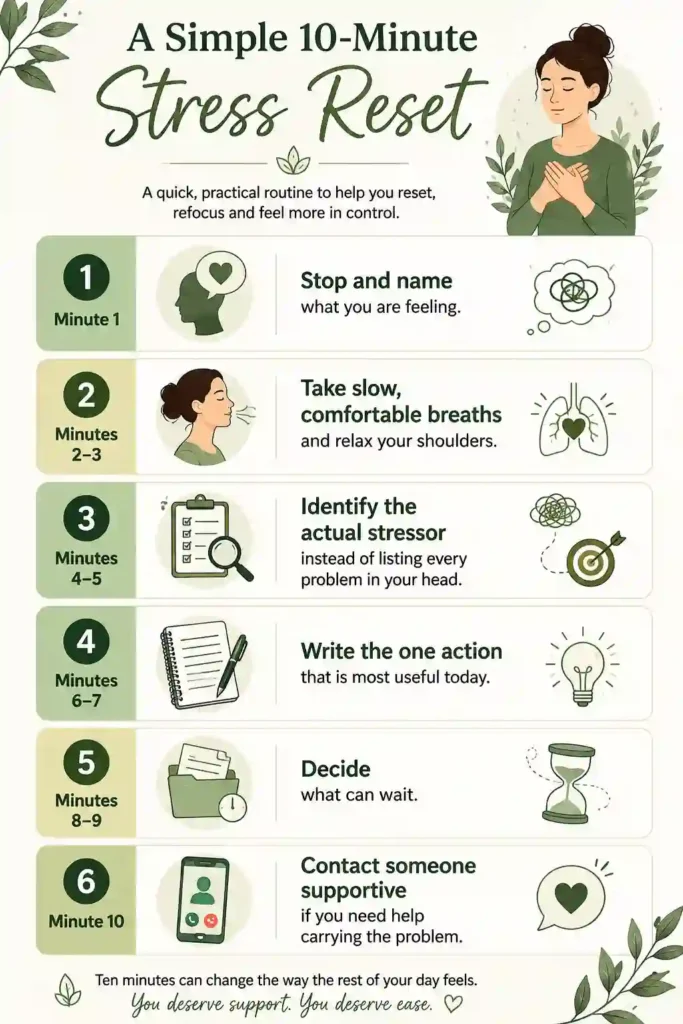
Start with a simple action: pause, slow your breathing, step away briefly from the immediate trigger, identify the next useful action and contact someone supportive if needed. For ongoing stress, address the underlying source as well as symptoms.

Stress usually has a clear, identifiable trigger and fades once that trigger resolves, while anxiety often persists without an obvious cause and can continue even after the stressful situation has passed. If your worry outlasts the actual problem, it’s likely anxiety.

Anxiety becomes a diagnosable mental health condition, such as generalized anxiety disorder, when symptoms are persistent, disproportionate to the situation, and interfere with daily functioning for six months or more, according to DSM-5-TR criteria. Occasional stress-related worry does not meet this threshold.

stress and anxiety

Leave a Comment

Your email address will not be published. Required fields are marked *

Scroll to Top
