
Women Well-Being
Midlife Crisis in Women: 7 Signs You Should Know
Feeling confused, overwhelmed, emotionally drained, or dissatisfied with your life in your 40s or 50s? You may be going through a midlife transition. Here are 7 common signs of a midlife crisis in women and what you can do about them.
There is a point in life when you may suddenly stop and ask yourself:
“Is this really the life I want?”
You may have a career, family, responsibilities, relationships, and a life that looks perfectly fine from the outside — yet internally, you may feel restless, disconnected, exhausted, or unsure about what comes next.
This experience is often described as a midlife crisis in women.
But a midlife crisis in women isn’t necessarily a breakdown. For many women, it can be a period of reflection and transition — a time when changing priorities, relationships, career goals, physical changes, and questions about identity bring previously ignored feelings to the surface.

In This Article
- What Is a Midlife Crisis in Women?
- Why Does a Midlife Crisis Happen?
- 7 Signs of a Midlife Crisis in Women
- Midlife Crisis vs. Normal Midlife Changes
- Midlife Crisis and Women’s Mental Health
- Midlife Crisis and Perimenopause
- Common Causes & Triggers
- How to Cope With a Midlife Crisis
- Self-Care and Lifestyle Changes
- When to Seek Professional Help
- Can a Midlife Crisis Be a New Beginning?
- Frequently Asked Questions
- Key Takeaways
What Is a Midlife Crisis in Women?
A midlife crisis in women is a period when a woman may begin questioning her identity, relationships, career, achievements, priorities, aging, and what she wants from the next stage of her life. It is not a formal mental health diagnosis, and not every woman experiences midlife changes in the same way.
For many women, these questions may become stronger during their 40s and 50s, although there is no fixed age for a midlife crisis. A woman may begin wondering whether she is happy with her life, whether she has achieved the things she once wanted, or what she wants from the next chapter of her life.
Sometimes the changes are easy to notice. A woman may experience mood swings, sleep problems, fatigue, irritability, emotional overwhelm, or a strong desire to make changes in her life. She may also begin questioning her career, relationships, responsibilities, or the identity she has built over the years.
In other cases, the struggle can be much quieter. She may continue working, taking care of her family, and managing everyday responsibilities while internally feeling unhappy, confused, emotionally drained, or disconnected from herself.
Midlife can also overlap with important physical and hormonal changes. For some women, perimenopause and menopause may bring symptoms such as changes in sleep, mood, energy, and concentration. Stress, anxiety, depression, and other health conditions can also cause similar symptoms, so it is important not to assume that every emotional or physical change is simply a midlife crisis.
The important question is not simply, “Am I having a midlife crisis?” but “What has changed in my life, what am I feeling, and is it affecting my daily life?”
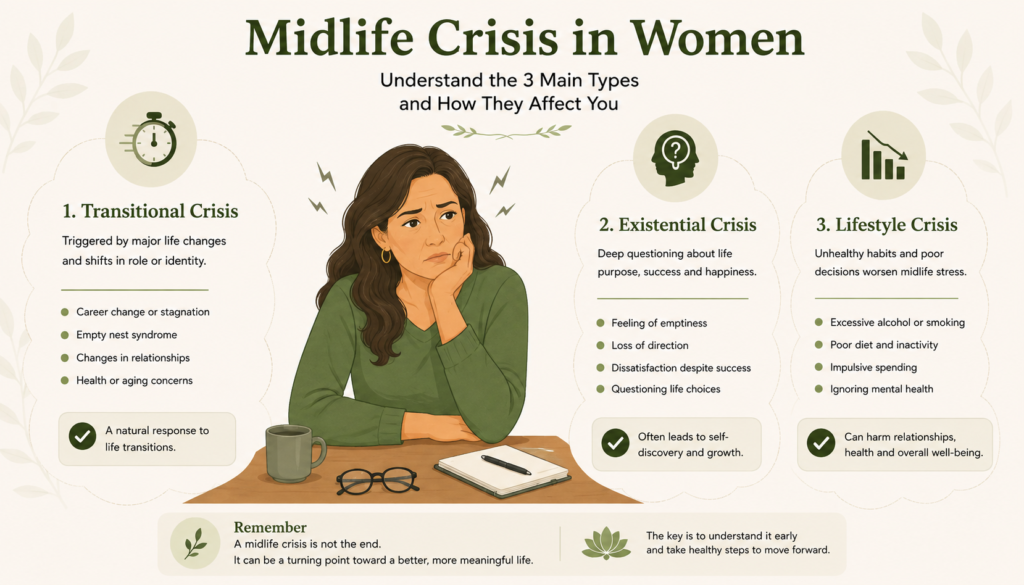
Common Patterns of Midlife Crisis in Women
The midlife crisis in women can look different from one woman to another. There is no single pattern or fixed type of midlife crisis. These experiences can be connected to midlife changes in women, questions about identity and purpose, changing relationships, and pressure from everyday responsibilities. A woman may experience one pattern or several at the same time.
Life Transition
Major changes such as children growing up, career changes, relationship changes, caring for aging parents, or concerns about health and aging can make a woman question her role and direction in life. These transitions may contribute to common midlife crisis symptoms in women.
Identity & Purpose
A woman may start questioning her identity, achievements, career, personal goals, relationships, and whether her current life still feels meaningful. Unfulfilled dreams, changing priorities, and comparing her life with others can make these feelings stronger and may become part of the midlife crisis causes.
Emotional Pressure & Restlessness
Work pressure, family responsibilities, relationship strain, financial concerns, health changes, and awareness of aging can create emotional restlessness, anxiety, frustration, or a strong desire for change in everyday life.
Remember: The patterns of midlife crisis in women can overlap, and not every woman experiences the same changes. Midlife feelings can also overlap with stress, anxiety, depression, perimenopause, menopause, sleep problems, and other health concerns. Understanding what has changed, what is causing the distress, and how it is affecting daily life can be the first step toward managing a difficult midlife period in a healthier way.
Why Does a Midlife Crisis Happen in Women?
There is usually no single reason behind a midlife crisis in women. For many women, several life changes, responsibilities, emotional pressures and personal concerns may come together during the same stage of life. These are some of the common causes of midlife crisis in women and may contribute to emotional uncertainty, restlessness, stress and questions about the future.
- Children Growing Up: As children become more independent, a woman’s role within the family may change. The transition can leave her with more time to reflect on her own identity, goals and future, and may contribute to midlife crisis symptoms in women.
- Caring for Aging Parents: Supporting aging parents can introduce new emotional and practical responsibilities. Managing caregiving alongside work, relationships and family responsibilities can contribute to midlife stress and emotional exhaustion.
- Career Pressure: A career that no longer feels fulfilling, limited opportunities for growth, burnout or questioning past career choices can lead to dissatisfaction and self-doubt. These experiences may become part of the midlife changes in women.
- Relationship Changes: Long-term relationships can change as responsibilities, priorities and family circumstances evolve. A woman may begin questioning what she needs emotionally, what makes her feel connected, and what she wants from her relationships.
- Physical and Hormonal Changes: Changes in the body, energy levels, sleep and appearance can make aging feel more noticeable. For some women, perimenopause and menopause may also bring physical and emotional changes that overlap with experiences often described as a midlife crisis.
- Unmet Goals and Changing Priorities: Dreams or personal goals that were postponed because of family, career or other responsibilities may come back into focus. A woman may begin asking herself what she still wants to accomplish and whether her current life reflects her priorities.
Why can it feel overwhelming?
The difficulty often comes from several changes happening at once. A woman
may be managing career pressure, family responsibilities, changing
relationships, physical changes and concerns about aging at the same time.
These factors can affect emotional wellbeing and contribute to
stress and anxiety.
Understanding the connection between ongoing stress and the mind and body can
also be helpful. Read our detailed guide on
how stress affects the human mind and body
to learn more.
Midlife Crisis Symptoms in Women
The symptoms of a midlife crisis in women can be different for every woman. Some changes may be easy to notice, while others can happen quietly. Common midlife crisis symptoms in women may involve changes in mood, behaviour, relationships, career, identity, sleep and the way a woman feels about aging and the future.
- Restlessness & Desire for Change: Feeling uncomfortable with the usual routine and developing a strong desire to change your career, relationships, lifestyle, appearance or direction in life.
- Emotional Changes: Experiencing increased irritability, frustration, sadness, emotional sensitivity, anxiety or feeling overwhelmed. These changes can have several possible causes and should not automatically be considered a midlife crisis.
- Sleep Problems: Having difficulty falling asleep, staying asleep, or feeling rested after sleep. Sleep changes can occur during midlife and may also be associated with stress, anxiety, perimenopause or menopause.
- Feeling Disconnected From Yourself: Questioning your identity, priorities or sense of purpose and wondering whether the life you are living still reflects who you are and what you want.
- Career Dissatisfaction: Feeling that your work has lost its meaning, experiencing burnout, or questioning whether your current career still fits your goals and values.
- Relationship Changes: Feeling emotionally distant from a partner, family members or friends, or wanting more independence and personal space as your priorities change.
- Anxiety About Aging: Thinking more frequently about aging, physical changes, health, appearance, the future or how much time remains to achieve personal goals.
- Changes in Energy & Motivation: Experiencing lower energy, reduced motivation, difficulty concentrating or less interest in activities you previously enjoyed. These symptoms can have many possible physical and psychological causes.
Remember: Having one or more of these signs does not automatically mean a woman is experiencing a midlife crisis. What matters is whether the changes are persistent, becoming difficult to manage, or affecting her relationships, work, sleep or everyday life. Similar symptoms can also occur with perimenopause, menopause, stress, anxiety, depression, sleep problems and other health conditions. If symptoms are persistent or concerning, speaking with a qualified healthcare or mental-health professional can help identify the underlying cause.
How Does a Midlife Crisis Feel in Women?
A midlife crisis in women can show up in a woman’s thoughts, emotions, behaviour, physical wellbeing and relationships. She does not need to experience every sign for midlife changes to be affecting her. For some women, the changes may be obvious, while for others they may feel more like a quiet sense of restlessness, uncertainty or disconnection.
| Emotional | Behavioural | Thoughts | Relationships |
|---|---|---|---|
| Restlessness or feeling overwhelmed | Sudden desire to change routines or lifestyle | Questioning life choices and priorities | Withdrawing from family or friends |
| Irritability or emotional sensitivity | Spending more time alone | Worrying about aging or the future | Less communication with loved ones |
| Feeling dissatisfied or unfulfilled | Changing appearance, hobbies or interests | Comparing your life with others | Feeling emotionally distant |
| Anxiety or persistent worry | Wanting major career or lifestyle changes | Questioning career, relationships or personal success | More arguments or tension with a partner |
| Feeling lost or disconnected from yourself | Seeking new experiences or greater independence | Thinking about unfinished goals and old dreams | Wanting more personal space or emotional support |
These experiences can vary from woman to woman. A few changes do not automatically mean someone is experiencing a midlife crisis. Some symptoms can also overlap with stress, anxiety, depression, perimenopause, menopause and sleep problems. What matters is how persistent the changes are and whether they begin affecting everyday life, work, sleep or relationships.
Common Causes of Midlife Crisis in Women
A midlife crisis in women usually does not happen because of one single problem. It can develop when several personal, family, career, relationship and life changes begin happening around the same time. These changes may contribute to midlife stress, emotional uncertainty and common midlife crisis symptoms in women.
- Career dissatisfaction: Feeling stuck in a job, experiencing burnout, missing expected career opportunities or no longer finding meaning and satisfaction in work.
- Children growing up: As children become more independent, a woman’s role and responsibilities within the family may change. This can create space for questions about identity, purpose and what she wants for herself.
- Aging parents: Caring for aging parents can add emotional and practical pressure during an already demanding stage of life, particularly when combined with work and family responsibilities.
- Relationship strain: Years of routine, responsibilities, changing priorities or poor communication can create emotional distance between partners and contribute to midlife emotional changes.
- Unfulfilled goals: Personal dreams, education, travel, career plans or other goals that were postponed for years may come back into focus and lead to regret or a strong desire for change.
- Financial pressure: Household expenses, children’s education, family responsibilities, career uncertainty and retirement planning can increase stress and make the future feel overwhelming.
- Changes in health and wellbeing: Changes in energy, sleep, fitness, body image or physical wellbeing can make aging feel more noticeable and may affect confidence and emotional health.
- Awareness of aging: Thinking more about time, aging, health, mortality and the future can lead to deeper questions about life, purpose, achievements and what comes next.
Risk Factors for Midlife Crisis in Women
Certain personal, emotional and life circumstances may make a difficult midlife transition in women harder to manage. These factors do not mean that a woman will definitely experience a midlife crisis, but they can add to emotional pressure, stress and uncertainty during this stage of life.
How to Cope With a Midlife Crisis in Women
Learning how to cope with a midlife crisis in women does not mean trying to completely change your life overnight. Midlife can be a period of uncertainty, but it can also become an opportunity to understand your changing priorities, improve your wellbeing and create a more meaningful next chapter.
1. Give Yourself Time to Reflect
Instead of immediately making major decisions, give yourself time to understand what you are feeling. Ask yourself what has changed, what is making you unhappy and what you genuinely want from the next stage of your life.
2. Prioritize Your Physical Health
Sleep, regular physical activity, balanced nutrition and routine healthcare can support your overall wellbeing. Taking care of your body can also make it easier to manage midlife stress and emotional changes.
3. Reconnect With Yourself
Think about the hobbies, interests and goals that may have been pushed aside because of family, work or other responsibilities. Reconnecting with yourself can help rebuild a sense of identity and purpose.
4. Talk to Someone You Trust
You do not have to handle difficult emotions alone. Talking openly with a trusted friend, partner, family member, counselor or mental-health professional can help you understand what you are experiencing.
5. Set Healthy Boundaries
Midlife can be a time when you realize that you have been putting everyone else’s needs before your own. Setting reasonable boundaries can help reduce overwhelm and create more space for self-care and emotional wellbeing.
6. Avoid Comparing Your Life With Others
Social media and comparisons with friends or people from the same age group can make dissatisfaction feel stronger. Everyone’s circumstances are different, and your midlife journey does not need to look like someone else’s.
7. Make Changes Gradually
If you want to change your career, lifestyle, relationships or daily routine, consider starting with smaller steps. You do not necessarily need to reinvent your entire life to create meaningful change.
8. Seek Professional Support When Needed
If anxiety, sadness, sleep problems, emotional distress or other midlife crisis symptoms are persistent or affecting your daily life, consider speaking with a qualified healthcare or mental-health professional.
When Should Women Seek Professional Help?
Experiencing midlife changes does not automatically mean that something is wrong. However, if emotional, physical or behavioural changes become persistent, overwhelming or start affecting everyday life, it may be time to seek professional support.
If constant worry, nervousness or feeling on edge is making it difficult to work, sleep, relax or enjoy everyday activities, talking with a qualified professional can be helpful.
Persistent sadness, hopelessness, loss of motivation or feeling emotionally empty should not simply be dismissed as a midlife crisis.
If hobbies, relationships or activities that once brought enjoyment no longer feel interesting or meaningful, consider discussing the change with a healthcare or mental-health professional.
Ongoing difficulty falling asleep, staying asleep or feeling rested can affect mood, energy and concentration. Sleep changes may also be associated with stress, anxiety, perimenopause or menopause.
If emotional changes are causing frequent arguments, withdrawal, isolation or significant difficulties with a partner, family members or friends, professional support may help.
If work, household responsibilities, relationships or normal daily tasks are becoming difficult to manage because of emotional distress, it is important to seek appropriate support.
New or persistent physical symptoms, significant sleep changes, menstrual changes or other symptoms around perimenopause or menopause should be discussed with a qualified healthcare professional.
You do not have to wait until your symptoms become severe. If you have been feeling overwhelmed, disconnected or unable to cope for an extended period, reaching out for support is a reasonable step.
Can a Midlife Crisis Be a New Beginning?
A midlife crisis in women does not always have to be viewed as something negative. For some women, a difficult period of questioning and change can become an opportunity to understand themselves better, rethink their priorities and create a more meaningful next chapter.
Rediscover Your Identity
Midlife can be a time to look beyond the roles you have carried for years and ask what makes you feel fulfilled as an individual. Rediscovering your interests, values and personal goals can strengthen your sense of identity.
Revisit Unfulfilled Dreams
Some goals may have been postponed because of family, career or financial responsibilities. You do not have to achieve everything at once, but revisiting an old dream can help you decide what still matters to you.
Create Healthier Boundaries
Midlife can encourage you to recognize where you are giving too much of your time and energy. Setting healthier boundaries can create more space for rest, relationships, personal interests and self-care.
Explore New Interests
Learning something new, returning to a forgotten hobby, travelling, being creative or developing a new skill can bring a sense of curiosity and purpose to everyday life.
Strengthen Your Relationships
Changing priorities do not necessarily mean leaving relationships behind. Open communication, emotional support and spending meaningful time with people you trust can help you navigate a difficult midlife transition.
Focus on Personal Growth
Instead of focusing only on what may have been missed in the past, consider what you can learn, experience and build from this point forward. Midlife can become an opportunity for greater self-awareness and personal growth.
Midlife Crisis in Women vs. Normal Midlife Changes
Not every emotional or physical change during midlife means that a woman is experiencing a midlife crisis. Midlife is naturally a period of change, and many women experience shifting priorities, relationships, career goals, physical changes and new responsibilities. Understanding the difference can help you respond to these changes without unnecessarily labeling yourself.
| Normal Midlife Changes | Possible Midlife Crisis |
|---|---|
| Thinking more about future goals and gradually changing personal priorities. | Feeling an intense or persistent need to completely change your life because your current situation feels unbearable or deeply unfulfilling. |
| Occasionally questioning career, relationships or life choices. | Constantly questioning major life decisions and feeling unable to find satisfaction with your current life. |
| Wanting to spend more time on yourself, hobbies or personal interests. | Feeling disconnected from your identity and experiencing a strong sense that you have lost yourself. |
| Making gradual lifestyle changes that feel appropriate and manageable. | Making sudden or impulsive decisions without considering their possible long-term consequences. |
| Occasional concerns about aging, appearance or physical changes. | Persistent distress about aging, appearance, health or the amount of time left to achieve personal goals. |
| Experiencing temporary stress or emotional ups and downs. | Persistent emotional distress, anxiety, irritability or low mood that begins affecting everyday life and relationships. |
Midlife Crisis and Perimenopause: What’s the Connection?
For many women, midlife changes and perimenopause can happen during the same period of life. This can make it difficult to understand whether changes in mood, sleep, energy or emotions are related to a midlife crisis, hormonal changes, stress or something else.
Mood Changes
Perimenopause can be associated with changes in mood, increased emotional sensitivity or irritability. These experiences can sometimes be mistaken for a midlife crisis in women, particularly when they occur alongside major life changes.
Sleep Problems
Changes in sleep can occur during perimenopause and may contribute to daytime tiredness, irritability and difficulty coping with everyday stress. Poor sleep can also make existing emotional difficulties feel stronger.
Changes in Energy
Feeling more tired or having changes in energy can affect motivation and emotional wellbeing. Persistent fatigue should not automatically be attributed to a midlife crisis.
Difficulty Concentrating
Some women notice changes in concentration or memory during the menopause transition. These changes can be frustrating and may add to feelings of stress or uncertainty.
Physical Changes
Changes such as hot flashes, night sweats, menstrual changes and other physical symptoms can affect sleep, confidence and overall wellbeing during the menopause transition.
Life Changes at the Same Time
Perimenopause may happen alongside career pressure, changing relationships, children becoming independent, caring for parents or concerns about aging. The combination can make this stage feel particularly overwhelming.
How to Support a Woman Going Through a Midlife Crisis
Supporting someone experiencing a midlife crisis in women starts with understanding rather than judgment. A woman may be dealing with changing priorities, relationship concerns, career pressure, physical changes, stress or questions about her identity and future. Sometimes, simply knowing that someone is willing to listen can make a significant difference.
Listen Without Judging
Give her space to talk about what she is feeling without immediately telling her what she should or should not do. Feeling heard can help reduce emotional pressure and make it easier to understand what is really bothering her.
Take Her Feelings Seriously
Avoid dismissing her concerns as simply a “phase” or telling her that she should be grateful for what she already has. Her feelings may be connected to real changes in her life and deserve to be understood.
Encourage Self-Care
Support healthy habits such as adequate sleep, regular movement, balanced meals, relaxation and time for personal interests. Small changes can support both physical and emotional wellbeing.
Respect Her Need for Space
Some women may need more personal time while reassessing their priorities. Giving her reasonable space does not mean becoming emotionally distant. It can create room for reflection and healthy independence.
Encourage Open Communication
If relationship difficulties are involved, create opportunities for calm and honest conversations. Focus on understanding rather than trying to win an argument or immediately solve every problem.
Encourage Professional Support
If emotional distress, anxiety, low mood, sleep problems or other midlife crisis symptoms in women persist or interfere with daily life, gently encourage her to speak with a qualified healthcare or mental-health professional.
Avoid making jokes about her age, dismissing her emotions, comparing her with other women, pressuring her to make major decisions, or assuming that every change is caused by a “midlife crisis.” Similar symptoms can also occur with stress, anxiety, depression, perimenopause, menopause and sleep problems.
How Long Does a Midlife Crisis Last in Women?
If you are wondering how long does a midlife crisis last in women, there is no single timeline that applies to everyone. A difficult midlife transition can be temporary for some women, while others may experience emotional or lifestyle changes for a longer period. The duration can depend on personal circumstances, relationships, career, physical health, stress levels and available emotional support.
There Is No Fixed Duration
There is no medically defined length for a midlife crisis in women because “midlife crisis” is not a formal mental health diagnosis. The experience can vary significantly from woman to woman.
Life Changes Can Affect the Timeline
Career dissatisfaction, relationship difficulties, financial concerns, children becoming independent, caring for aging parents and concerns about aging can all contribute to midlife stress and influence how long a difficult period feels.
Symptoms May Have Other Causes
Some midlife crisis symptoms in women can overlap with anxiety, depression, chronic stress, sleep problems, perimenopause and menopause. Identifying the underlying cause is important rather than assuming every symptom is part of a midlife crisis.
Support Can Help With Recovery
Healthy routines, supportive relationships, self-care and professional support when appropriate can help women manage midlife emotional changes and cope with difficult transitions in a healthier way.
If midlife anxiety, sadness, irritability, sleep problems, loss of interest or emotional distress continue for a prolonged period, become worse or begin affecting work, relationships or everyday activities, consider speaking with a qualified healthcare or mental-health professional.
How to Prevent a Midlife Crisis in Women?
There is no guaranteed way to prevent a midlife crisis in women, and experiencing difficult emotions during midlife does not mean that something has gone wrong. However, building healthy habits, maintaining supportive relationships and paying attention to your emotional wellbeing can make midlife changes easier to manage.
1. Stay Connected With Yourself
Make time to understand your own needs, interests, values and goals instead of focusing only on work, family or other responsibilities. Maintaining a strong sense of identity can support emotional wellbeing during a midlife transition.
2. Take Care of Your Physical Health
Regular physical activity, nutritious food, adequate sleep and routine healthcare can support overall wellbeing. Physical health and emotional health are closely connected, particularly during periods of increased midlife stress.
3. Build Strong Social Connections
Maintain meaningful relationships with friends, family members, your partner or other people you trust. Having someone to talk to can make it easier to manage difficult emotions and life changes.
4. Make Time for Personal Interests
Hobbies, creativity, learning, travel, exercise or other activities that you enjoy can provide a sense of purpose beyond everyday responsibilities. Personal interests can also support midlife wellbeing.
5. Manage Stress Early
Do not wait until stress becomes overwhelming. Relaxation, healthy routines, realistic expectations, time management and regular breaks can help reduce long-term emotional pressure.
6. Set Healthy Boundaries
Learning to say no when necessary and creating reasonable boundaries around work, family and personal responsibilities can reduce feelings of being constantly overwhelmed.
7. Talk About Major Life Changes
Career changes, relationship difficulties, children becoming independent, caring for aging parents and concerns about aging can bring strong emotions. Talking about these changes rather than keeping everything inside may help you process them more effectively.
8. Pay Attention to Persistent Symptoms
Do not automatically assume that anxiety, low mood, sleep problems, fatigue or other midlife crisis symptoms in women are simply part of getting older. Persistent symptoms may have other causes and deserve proper attention.
Not necessarily. A midlife crisis is not a formal medical diagnosis, and there is no guaranteed method for preventing it. The goal is not to avoid every difficult emotion, but to develop healthy ways of responding to midlife stress, emotional changes and major life transitions. If symptoms become persistent or interfere with everyday life, professional support can be helpful.
