
Well-Being
Midlife Crisis in Men: Symptoms, Causes, Signs & How to Cope
There is a common image of a man going through a midlife crisis: suddenly buying an expensive bike, changing his appearance, becoming distant from his family, leaving a stable job or looking for excitement outside his usual routine.
But real life is usually more complicated.
A man going through a difficult midlife transition may not do anything dramatic at all. He may simply become quieter. He may stop enjoying things he once loved. He may feel unhappy despite having a stable job, family and financial security. He may keep asking himself, “Is this really the life I wanted?”
That is why understanding midlife crisis in men is important.
A midlife crisis is not a formal mental health diagnosis, and not every man experiences one. Psychology research has also questioned the idea that everyone goes through a dramatic “crisis” in middle age. However, many people do experience a period of deep reflection, dissatisfaction, anxiety or major life changes during midlife.
For some men, this period becomes an opportunity to understand themselves better and make healthier changes.

In This Article
- What Is a Midlife Crisis in Men?
- Why Does a Midlife Crisis Happen?
- Midlife Crisis Symptoms in Men
- Common Causes of Midlife Crisis in Men
- Risk Factors
- The Science Behind Midlife Crisis
- Real-Life Examples
- Common Mistakes Men Make
- Treatment for Midlife Crisis
- Lifestyle Changes That Help
- Exercise & Meditation
- Breathing Exercises
- When to Seek Professional Help
- Frequently Asked Questions
What Is a Midlife Crisis in Men?
A midlife crisis is a period when a man may start questioning his life, career, relationships, achievements, aging and what he wants from the future. It is not a formal mental health diagnosis, and not every man experiences it in the same way.
For many men, these questions become stronger during their 40s and 50s, although there is no fixed age for a midlife crisis. A man may begin wondering whether he has achieved enough, whether he is happy with his career, or what he wants from the next stage of his life.
Sometimes the change is easy to notice. A man may become restless, irritable, distant from his family or suddenly interested in making major changes. In other cases, the struggle is much quieter. He may continue working and managing his responsibilities while feeling unhappy, confused or disconnected inside.
To explore this topic visually, you can also learn more about midlife changes in men on Instagram .
The important question is not simply, “Is he having a midlife crisis?” but “What has changed in his life, what is he feeling, and is it affecting his daily life?”
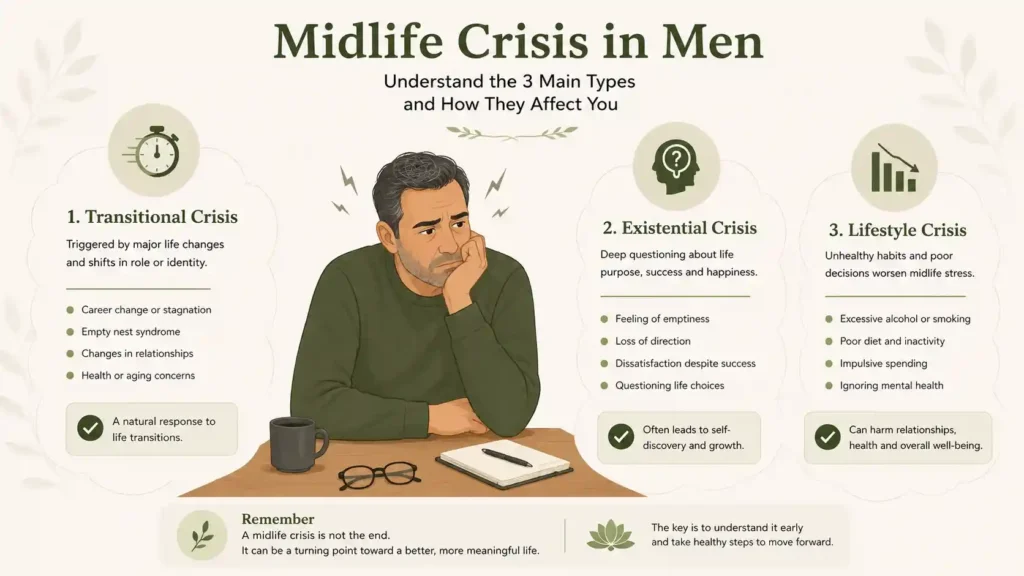
Common Patterns of Midlife Crisis in Men
The midlife crisis in men can look different from one man to another. There is no single pattern or fixed type of midlife crisis. These experiences are often connected to midlife changes in men, questions about purpose, and pressure from everyday responsibilities. A man may experience one pattern or several at the same time.
Life Transition
Major changes such as children growing up, career changes, relationship problems, aging parents or concerns about health can make a man question his role and direction in life. These changes can contribute to common midlife crisis symptoms in men.
Identity & Purpose
A man may start questioning his achievements, career, personal goals and whether his current life feels meaningful. Unmet dreams and comparison with others can make these feelings stronger and may become part of the midlife crisis causes.
Pressure & Restlessness
Financial pressure, relationship strain, health concerns and awareness of aging can create restlessness, anxiety or a strong desire to escape the routine of everyday life.
Remember: The types of midlife crisis in men can overlap, and not every man experiences the same changes. Understanding what has changed, what is causing the distress, and how it is affecting daily life can be the first step toward managing a difficult midlife period in a healthier way.
Why Does a Midlife Crisis Happen in Men?
There is usually no single reason behind a midlife crisis in men. For many men, several life changes, responsibilities and personal concerns may come together at the same stage of life. These are some of the common causes of midlife crisis in men and may contribute to restlessness, emotional uncertainty and questions about the future.
- Children Growing Up: As children become more independent, a man may feel that his role in the family is changing. This change in family life can be one of the factors behind a midlife crisis in men.
- Aging Parents: Parents may begin needing more care and support, adding new responsibilities during an already demanding stage of life.
- Career Pressure: A career that has stopped progressing or does not feel as meaningful as expected can lead to dissatisfaction, self-doubt and common midlife crisis symptoms in men.
- Relationship Changes: A marriage or long-term relationship may feel different after years of routine, responsibilities and changing priorities.
- Changes in the Body: Physical changes and reduced energy can make aging feel more real and may affect confidence. These changes can also make a man think more about his health and future.
- Unmet Goals: Dreams or plans that were postponed for years may lead a man to question what he has achieved and what he still wants from life.
Why can it feel overwhelming?
The difficulty often comes from several changes happening at once. A man may be
managing career pressure, family responsibilities, changing relationships and
concerns about aging all at the same time. Understanding these
midlife crisis causes can help explain why this stage may feel
emotionally difficult for some men.
Midlife Crisis Symptoms in Men
The symptoms of a midlife crisis can be different for every man. Some changes may be easy to notice, while others can happen quietly. Common signs include changes in mood, behaviour, relationships, career and the way a man feels about aging.
- Restlessness: Feeling uncomfortable with the usual routine and wanting a major change in life.
- Sudden Impulsive Decisions: Making unexpected decisions such as quitting a stable job, spending heavily or taking unnecessary risks.
- Irritability: Becoming easily frustrated, angry or impatient with family, friends or colleagues.
- Withdrawal From Family: Spending more time alone and becoming less open or emotionally connected with loved ones.
- Career Dissatisfaction: Feeling that work has lost its meaning or comparing personal achievements with younger or more successful colleagues.
- Appearance & Fitness Concerns: Becoming unusually focused on physical appearance, fitness, weight or looking younger.
- Anxiety About Aging: Thinking more about health, retirement, aging, death or the amount of time left in life.
- Changes in Energy or Libido: Experiencing changes in energy, motivation or sexual desire that may have several possible causes.
Remember: Having one of these signs does not automatically mean a man is experiencing a midlife crisis. What matters is whether the changes are persistent, becoming difficult to manage, or affecting his relationships, work or everyday life.
How Does a Midlife Crisis Feel in Men?
A midlife crisis can show up in a man’s thoughts, emotions, behaviour and relationships. He does not need to experience every sign for midlife changes to be affecting him.
| Emotional | Behavioural | Thoughts | Relationships |
|---|---|---|---|
| Restlessness | Sudden lifestyle changes | Questioning life choices | Withdrawing from family |
| Irritability | Taking unnecessary risks | Worry about aging | Less communication |
| Feeling dissatisfied | Spending more than usual | Comparing himself with others | Feeling emotionally distant |
| Anxiety | Changing routines suddenly | Questioning career success | Arguments with partner |
| Feeling lost | Seeking constant excitement | Thinking about unfinished goals | Wanting more personal space |
These experiences can vary from man to man. A few changes do not automatically mean someone is going through a midlife crisis. What matters is how persistent the changes are and whether they begin affecting everyday life, work or relationships.
Common Causes of Midlife Crisis in Men
A midlife crisis usually does not happen because of one single problem. It can develop when several personal, family, career and life changes begin happening around the same time.
- Career dissatisfaction: Feeling stuck in a job, missing expected promotions or no longer finding meaning in work.
- Children growing up: As children become more independent, a man’s role and responsibilities within the family may change.
- Aging parents: Caring for aging parents can add emotional and practical pressure during an already busy stage of life.
- Relationship strain: Years of routine, responsibilities or poor communication can create emotional distance between partners.
- Unfulfilled goals: Old dreams and plans that were postponed for years may lead to regret or a desire for change.
- Financial pressure: Loans, children’s education, retirement planning and other responsibilities can increase stress.
- Changes in health: Changes in energy, fitness or physical wellbeing can make a man more aware of aging.
- Awareness of aging: Thinking more about time, mortality and the future can lead to deeper questions about life and purpose.
Risk Factors for Midlife Crisis in Men
Certain personal and life circumstances may make a difficult midlife transition harder to manage. These factors do not mean that a man will definitely experience a midlife crisis, but they can add to emotional pressure.
The Science Behind Midlife Crisis
Midlife can be a time when people become more aware of their choices, achievements, relationships and future. For some men, this increased self-reflection can bring questions about whether their current life matches what they once expected.
Research on adult wellbeing has found that life satisfaction can change across different stages of adulthood. Some people experience lower satisfaction during midlife, while others move through this period without a major crisis. This means that there is no single pattern that every man follows.
For some men, midlife becomes less about “getting older” and more about understanding what they want from the years ahead. Clearer priorities, greater self-awareness and acceptance of life changes can help turn a difficult period into a more meaningful one.
This is why a midlife crisis should not always be viewed as something negative. When a man takes time to understand his emotions, relationships, goals and priorities, the experience can become an opportunity for personal growth rather than a reason to make sudden decisions.
Real-Life Examples of Midlife Crisis in Men
A midlife crisis does not look the same for every man. It can appear through career concerns, family changes, personal goals or worries about aging. Here are some simple examples of how it may look in everyday life.
Career vs Personal Fulfilment
A man may have spent many years building his career but suddenly feel that his work does not give him the satisfaction he expected. He may start questioning whether he should continue on the same path.
Family Role vs Independence
When children grow up and become more independent, a father may feel that his role within the family is changing. He may need time to adjust to this new stage of life.
Past Goals vs Present Life
A man may look back at goals he once had but never pursued. This can lead to regret, restlessness or a strong desire to make changes.
Ageing vs Staying Active
Changes in physical fitness, energy or appearance may make aging feel more noticeable. Some men may respond by becoming more focused on fitness, appearance or staying active.
Financial Success vs Happiness
A man may have achieved financial stability but still feel emotionally unfulfilled. This can make him question whether financial success alone has given him the life he wanted.
Routine vs Desire for Change
After years of following the same routine, a man may suddenly feel restless and want something different, such as travelling, learning something new or changing his lifestyle.
Common Mistakes Men Make During a Midlife Crisis
When a man feels unhappy or restless during midlife, it can be tempting to make quick changes. But acting without understanding the real problem can sometimes create more stress. These are some common mistakes to avoid.
Making Sudden Decisions
Quitting a job, ending a relationship or making a major financial decision without thinking about the long-term consequences.
Keeping Everything Inside
Avoiding conversations about emotions and trying to handle every problem alone can make feelings of stress and isolation stronger.
Comparing With Others
Constantly comparing your career, appearance, money or lifestyle with other people can create unrealistic expectations and dissatisfaction.
Using Unhealthy Coping Habits
Relying on alcohol, overeating or other unhealthy habits to escape difficult feelings may provide temporary relief but can create bigger problems over time.
Ignoring Relationships
Becoming distant from a partner, children or close friends instead of communicating can increase loneliness and relationship problems.
Waiting Too Long for Help
Ignoring persistent emotional changes because they are considered “just part of getting older” can delay useful support.

Treatment for Midlife Crisis
A midlife crisis can be managed with the right support. The approach depends on what a man is struggling with, but it may involve emotional support, lifestyle changes, relationship support and professional guidance.
Psychotherapy
Therapy can help a man understand his emotions, identify what is causing dissatisfaction and make important life decisions more thoughtfully.
Lifestyle Restructuring
Improving sleep, reducing unhealthy habits, rebuilding routines and making time for personal interests can support emotional wellbeing.
Couples Counselling
When midlife changes are affecting a relationship, counselling can help partners communicate more openly and understand each other’s concerns.
Hormonal Evaluation
Changes in energy or libido may have medical causes. A doctor can evaluate symptoms and decide whether further medical assessment is appropriate.
Group Therapy
Talking with others going through similar challenges can reduce isolation and provide a sense of understanding and support.
Lifestyle Changes That Help
Small changes in daily life can make it easier to manage the emotional pressure that may come with midlife. Healthy routines can support better sleep, improve mood and create more space for personal interests. If stress or anxiety is also part of what you are experiencing, you can read our stress and anxiety guide for more information.
Improve Sleep Quality
Maintain a regular sleep routine and give your body enough time to rest and recover.
Reduce Alcohol Intake
Using alcohol to deal with difficult emotions can make sleep and emotional wellbeing worse over time.
Reconnect With People
Stay connected with friends, family or people you trust instead of dealing with everything alone.
Make Time for Hobbies
Return to activities you genuinely enjoy or try something new that gives you a sense of interest and purpose.
Try Journaling
Writing down your thoughts can help you understand recurring worries, emotions and the changes you want to make.
Create a Healthier Routine
Focus on simple, realistic habits instead of trying to change your entire life at once.
Exercise & Meditation
Taking care of your body and giving your mind time to slow down can be helpful during a difficult midlife period. Two simple practices are regular exercise and mindfulness meditation.
Regular Exercise
Regular moderate exercise can support physical and emotional wellbeing. Walking, cycling, strength training or another activity you enjoy can help you stay active and create a healthy break from daily pressure. The most useful exercise is one you can continue regularly rather than an extreme routine that lasts only a few days.
Mindfulness Meditation
Meditation gives you a few quiet minutes to slow down and notice your thoughts without immediately reacting to them. Practising mindfulness for around 10–15 minutes a day can be a simple way to create mental space and become more aware of your emotions.
Make It a Routine
Exercise and meditation work best when they become part of your normal routine. You do not have to make a major change. Start with a manageable activity and increase it gradually as it becomes comfortable.
Breathing Exercises for Immediate Relief
When emotions feel overwhelming, slow and controlled breathing can be a simple way to pause and give yourself a moment to settle. Two techniques commonly used for calming the body are 4-7-8 breathing and box breathing.
4-7-8 Breathing
Breathe in for 4 seconds, hold your breath for 7 seconds, and then slowly breathe out for 8 seconds. Repeat gently for a few rounds without forcing your breathing.
Box Breathing
Follow a simple 4-4-4-4 pattern: inhale for 4 seconds, hold for 4 seconds, exhale for 4 seconds, and hold again for 4 seconds. Repeat at a comfortable pace.
When to Seek Professional Help for Midlife Crisis in Men
Many men go through difficult periods during midlife without needing professional treatment. However, if the signs of midlife crisis in men become persistent, difficult to manage, or start affecting everyday life, relationships or work, it may be time to seek professional help. Persistent midlife crisis symptoms in men should not simply be ignored or dismissed as a normal part of getting older.
What are the common signs of a midlife crisis in men?
Common signs may include restlessness, irritability, sudden changes in behaviour,
career dissatisfaction, withdrawal from family, concerns about appearance,
anxiety about aging and a strong desire to escape routine.
At what age does a midlife crisis happen in men?
There is no fixed age. Midlife concerns are often associated with the 40s and 50s,
but every man’s experience is different and these feelings can occur earlier or later.
Can a midlife crisis affect a man's marriage?
Yes. Withdrawal, irritability, poor communication and dissatisfaction can create
distance between partners. Talking openly and seeking professional support when
needed can help.
How long does a midlife crisis last?
There is no fixed duration. It can vary depending on the person’s circumstances,
support system, emotional wellbeing and the changes happening in his life.
What are the symptoms of stress?
Yes. Understanding the underlying concerns, maintaining healthy routines, staying
connected with others and seeking professional support when necessary can help a
man move through a difficult midlife period.
Can a man overcome a midlife crisis?
Yes. Ongoing workload, long hours, low control, job insecurity, poor support or other workplace pressures can contribute to prolonged occupational stress.
Is a midlife crisis a mental health disorder?
No. “Midlife crisis” is not a formal mental health diagnosis. However, persistent
sadness, severe anxiety, loss of interest or other concerning symptoms may indicate
a mental health condition that deserves professional evaluation.
How can I reduce stress quickly?
Start with a simple action: pause, slow your breathing, step away briefly from the immediate trigger, identify the next useful action and contact someone supportive if needed. For ongoing stress, address the underlying source as well as symptoms.
What should a man do if he feels stuck during midlife?
Start by identifying what has changed and what is causing dissatisfaction. Talking
to someone you trust, improving daily routines and speaking with a qualified
professional can be useful first steps.
