
Teenage Boys and Responsibility
Helping Teenage Boys Grow into Responsible Young Men
The teenage years are a significant stage of growth and transformation. Teenage boys and responsibility are closely connected as young boys gradually develop the emotional, mental, social, and practical skills needed for adulthood.
Growing up is not simply about getting older. It involves learning how to make thoughtful decisions, manage emotions, take ownership of actions, respect others, and understand the consequences of choices.
With appropriate guidance from parents, teachers, mentors, and society, teenage boys can gradually develop the confidence and character needed to become responsible young men.
What Does Responsibility Mean for Teenage Boys?
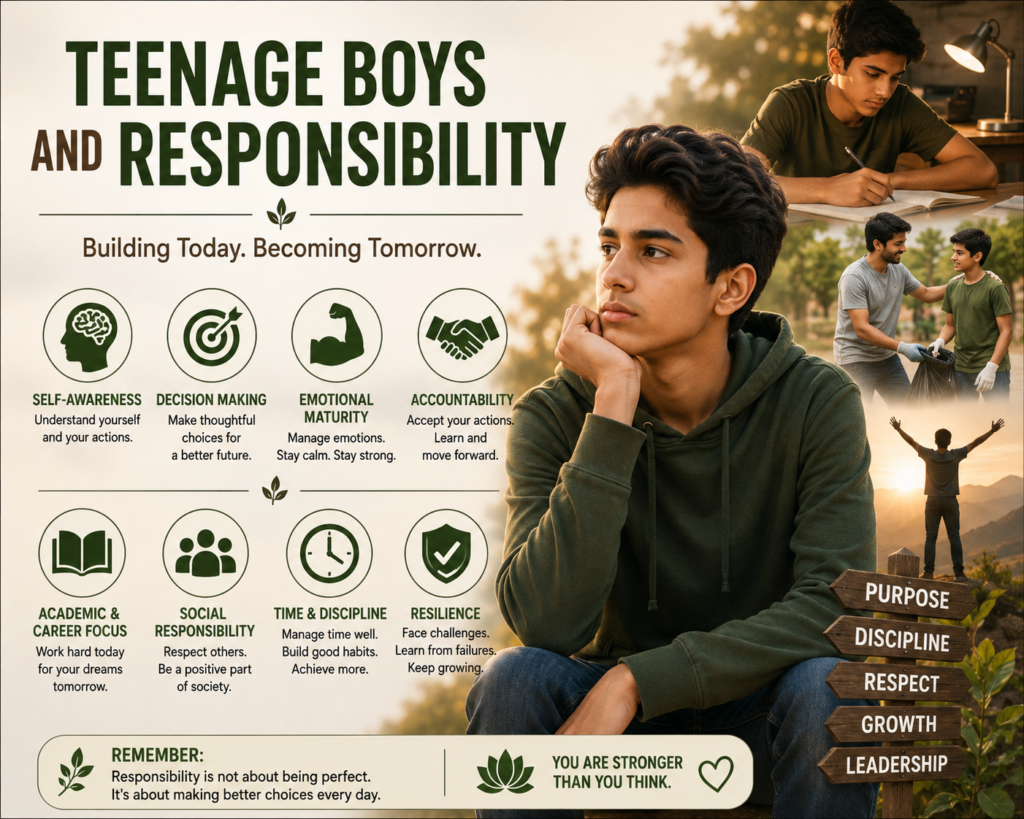
Responsibility means learning to take ownership of choices and actions— whether the outcome is positive or challenging.
For teenage boys, developing responsibility can involve:
- Making thoughtful decisions
- Taking accountability for their actions
- Managing emotions appropriately
- Developing discipline and consistency
- Managing time and priorities
- Understanding consequences
- Learning from mistakes and failures
- Developing integrity and purpose
Responsibility is not developed overnight. It is a gradual process shaped by experiences, guidance, challenges, experiments, struggles, and failures.
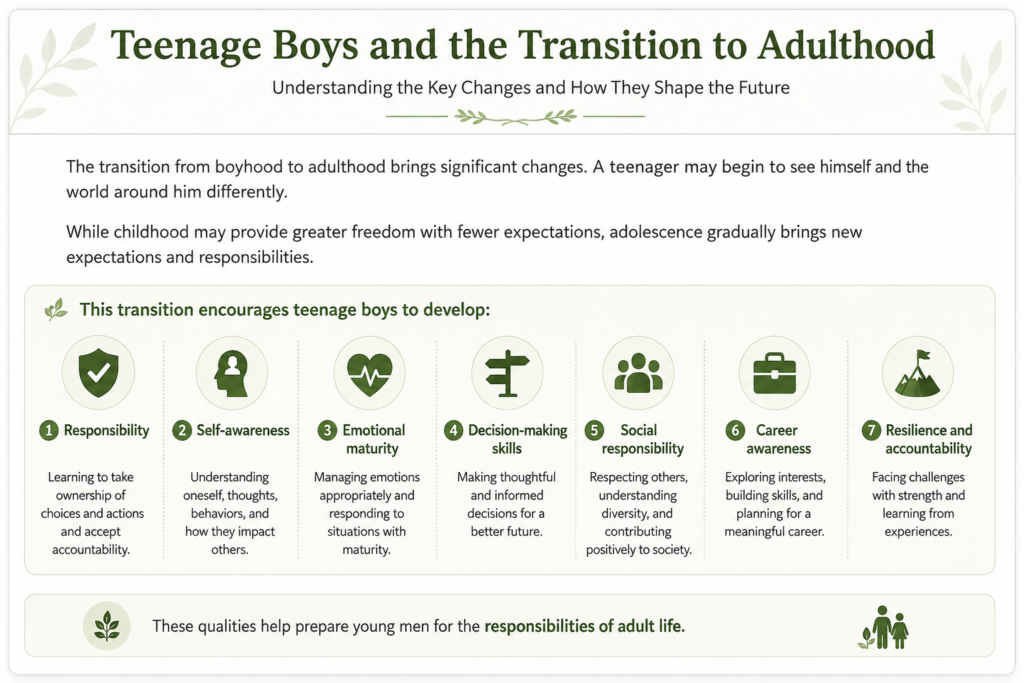
Teenage Boys and the Transition to Adulthood
The transition from boyhood to adulthood brings significant changes. A teenager may begin to see himself and the world around him differently.
While childhood may provide greater freedom with fewer expectations, adolescence gradually brings new expectations and responsibilities.
This transition encourages teenage boys to develop:
- Responsibility
- Self-awareness
- Emotional maturity
- Decision-making skills
- Social responsibility
- Career awareness
- Resilience and accountability
These qualities help prepare young men for the responsibilities of adult life.
How Can Parents Help Teenage Boys Develop Responsibility?
Parents and mentors play an important role in helping teenage boys navigate this transition.
Instead of expecting teenagers to understand every change immediately, adults can provide age-appropriate responsibilities, guidance, and opportunities to learn through real-life experiences.
Helpful approaches include:
Give Age-Appropriate Responsibilities
Allow teenage boys to take ownership of suitable tasks and decisions.
Encourage Open Conversations
Create an environment where they can talk without fear of immediate judgment.
Be a Role Model
Teenagers learn not only from what adults tell them but also from what they observe.
Encourage Accountability
Help them understand that choices have consequences and that mistakes can become learning experiences.
Build Resilience and Respect
Encourage them to handle challenges, respect others, and learn from difficult experiences.
Challenges Teenage Boys May Face
Growing up can be confusing even when the changes seem natural to adults.
Teenage boys may experience:
Understanding these challenges can help parents and mentors provide better support during the transition toward adulthood.
What Makes a Responsible Young Man?
Responsibility is ultimately reflected through character and actions.
A responsible young man learns to:
Becoming responsible does not mean being perfect. It means learning from experiences, taking ownership of actions, and continuing to grow with maturity and purpose.
Teenage Boys and Responsibility: Frequently Asked Questions
What does responsibility mean for teenage boys?
Responsibility means taking ownership of choices and actions, managing emotions, making thoughtful decisions, respecting others, and learning from consequences.
How can teenage boys develop responsibility?
Teenage boys develop responsibility through real-life experiences, age-appropriate responsibilities, guidance, decision-making, accountability, and learning from both successes and mistakes.
How can parents teach responsibility to teenage boys?
Parents can provide age-appropriate responsibilities, encourage open communication, model responsible behaviour, and help teenagers understand accountability and consequences.
Why is emotional maturity important for teenage boys?
Emotional maturity helps teenage boys recognize and express their feelings appropriately, manage difficult emotions, ask for help, and respond to challenging situations without aggression.
What skills do teenage boys need before adulthood?
Important skills include responsibility, self-awareness, emotional management, decision-making, communication, social responsibility, resilience, time management, and goal setting.
Helping Teenage Boys Become Responsible Adults
The journey from boyhood to adulthood is gradual. Every experience, decision, challenge, mistake, and achievement can contribute to a young person’s growth.
Teenage boys and responsibility should therefore be approached with patience, guidance, understanding, and support.
The goal is not simply to help boys become independent adults, but to help them develop into responsible, emotionally aware, respectful, resilient, and purposeful human beings .
With the right environment and supportive parents and mentors, the teenage years can become a strong foundation for a healthy and meaningful adulthood.